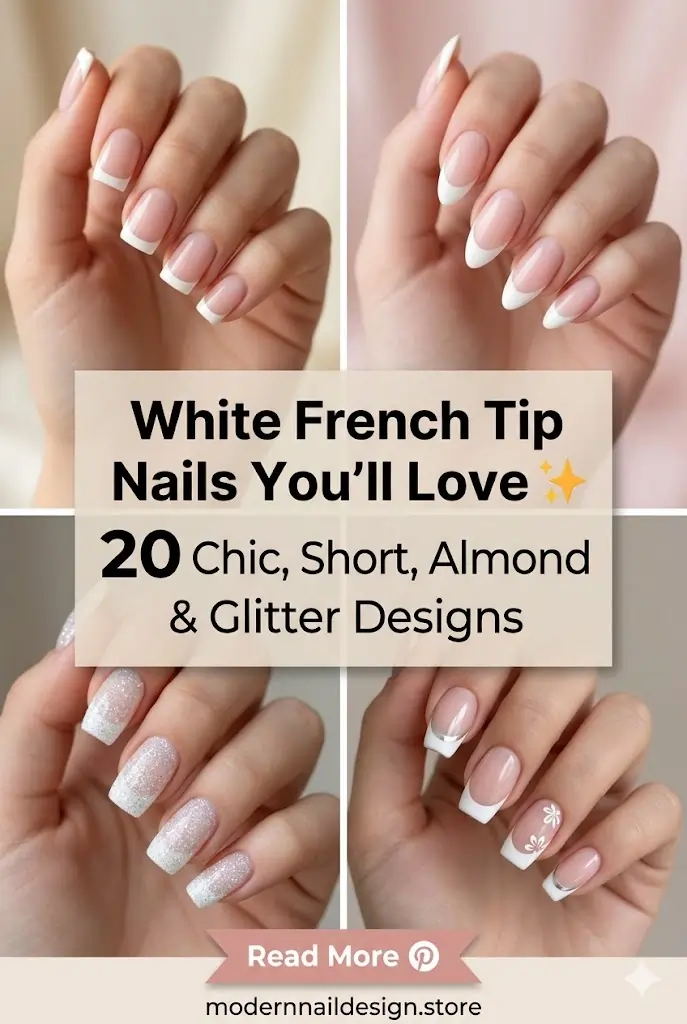
White French Tip Nails You’ll Love Chic, Short, Almond & Glitter Designs
I got my first proper French manicure at 19 and thought it was the most sophisticated thing I had ever worn. The white tip, the clean smile line, the natural base — it made my hands look polished in a way nothing else had.
Fifteen years and hundreds of variations later, French-tip nails still hold the same place for me. The classic never left — it just got updated. These 20 white French tip designs cover everything from the original to the most creative 2026 interpretations.
Why White French Tip Nails Remain the Most Requested Manicure
French tip nails work because they solve the fundamental nail problem: how to look groomed without appearing overdone. The white tip adds polish without colour commitment — a rare combination.
The 2026 French tip nail designs have expanded dramatically beyond the original single white line. Micro French tips, curved alternatives, double tips, and textured variations all maintain the core logic while offering fresh visual direction.
1 of 20 Classic White French Tip
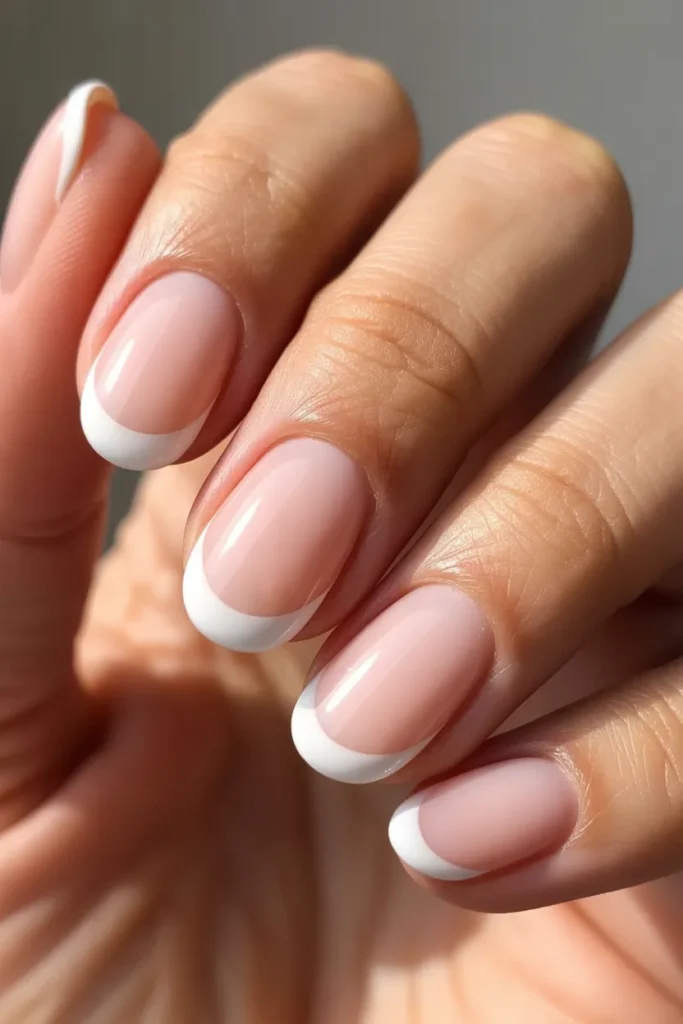
Classic white French tip nails on oval nails remain the most universally appropriate manicure. This combination serves every occasion, from job interviews to formal dinners.
The smile line must be consistent across all ten nails — this is what separates a professional French from a rushed one. Use Beetles Curved French Tip Guide Stickers for consistent smile line placement every time.
2 of 20 The Barely-There Whisper
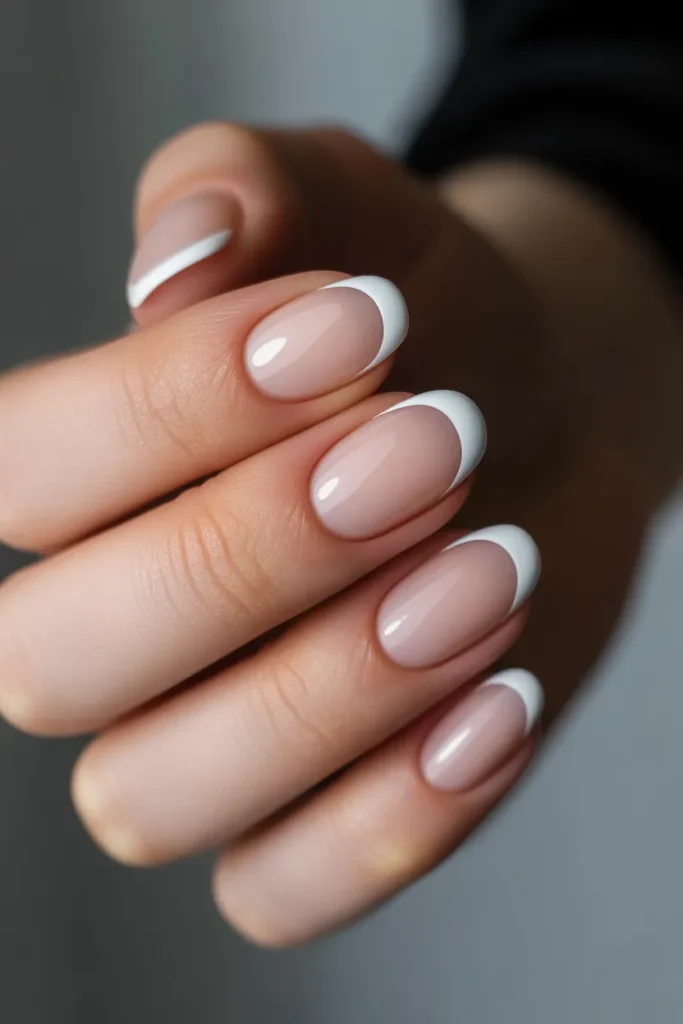
Micro French tip nails reduce the white tip to a hairline width — 1 to 2mm maximum. The effect is modern, barely perceptible, and genuinely sophisticated in a quiet luxury direction.
Applying a micro French tip requires nail tape placed precisely at the very edge of the nail. Apply white gel only to the exposed fraction, and remove the tape before curing. The thinner the tip, the more precise the tape placement must be.
3 of 20 The Most Flattering Shape
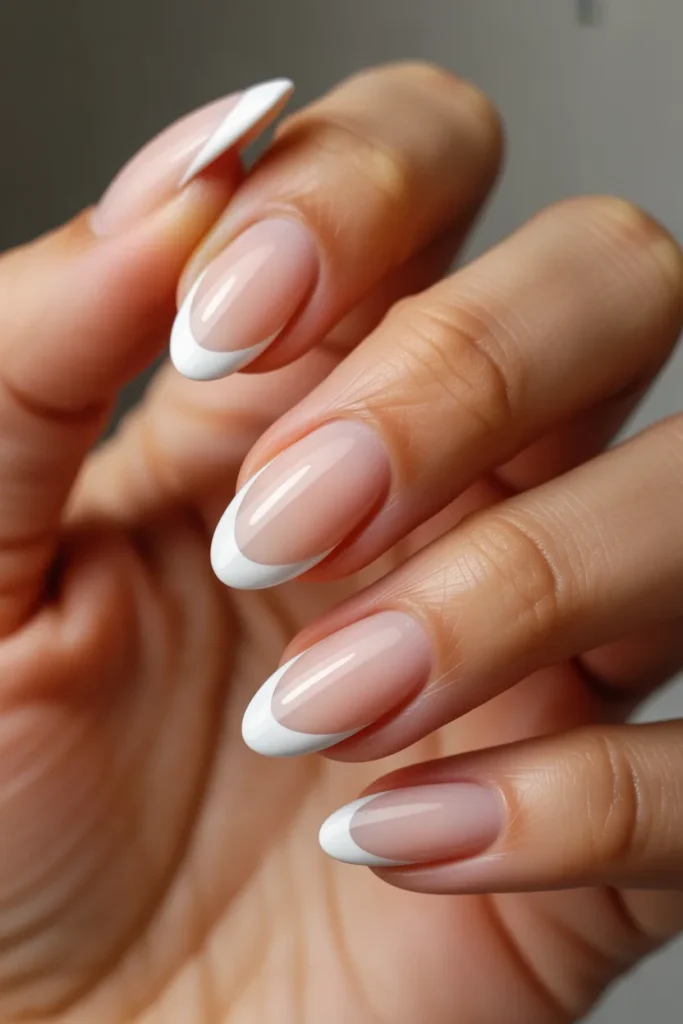
French tip nails, almond shape produce the most naturally elegant result — the curved smile line follows the almond tip’s contour and looks as if it grew that way rather than being applied.
On almond nails, position the French tip guide slightly higher than standard to account for the tapering sidewalls. The smile line should mirror the nail tip’s natural curve precisely. A mismatched curve reads as an error immediately on almond shapes.
4 of 20 White French Tip Gel Nails
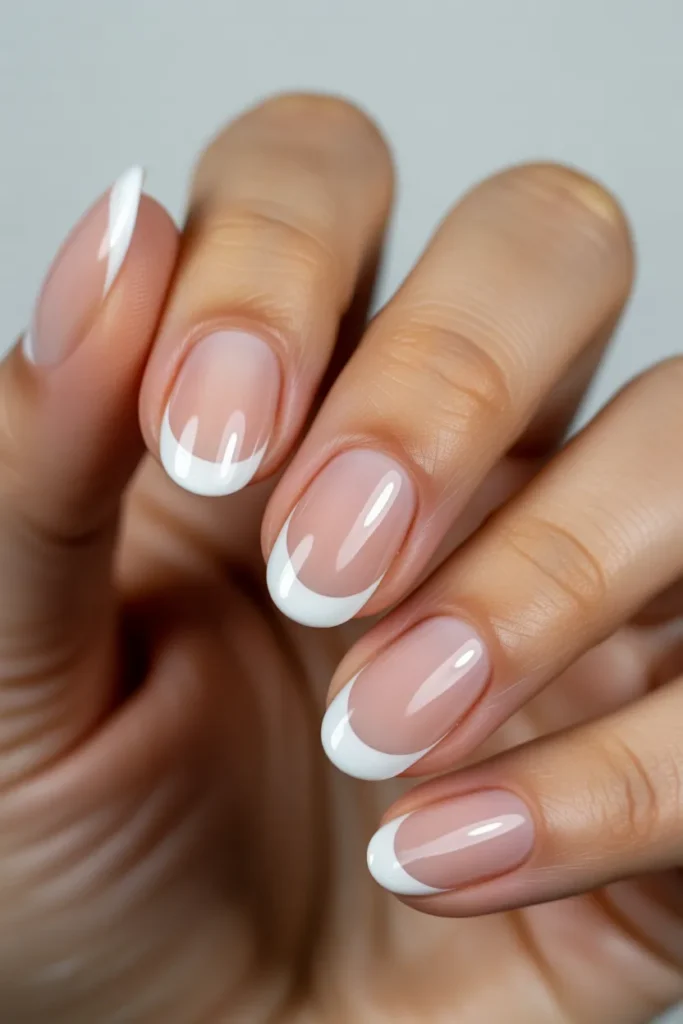
White French tip gel nails last significantly longer than regular polish versions — two to three weeks versus five to seven days. Gel also holds the white tip brighter without yellowing over time.
Use a dedicated white gel (not white gel paint) for French tips — it provides the right opacity and consistency for clean tip application. Beetles White Gel and Modelones Bright White Gel both deliver the clean, non-yellowing white needed for classic French manicures.
5 of 20 Modern Graphic Structure
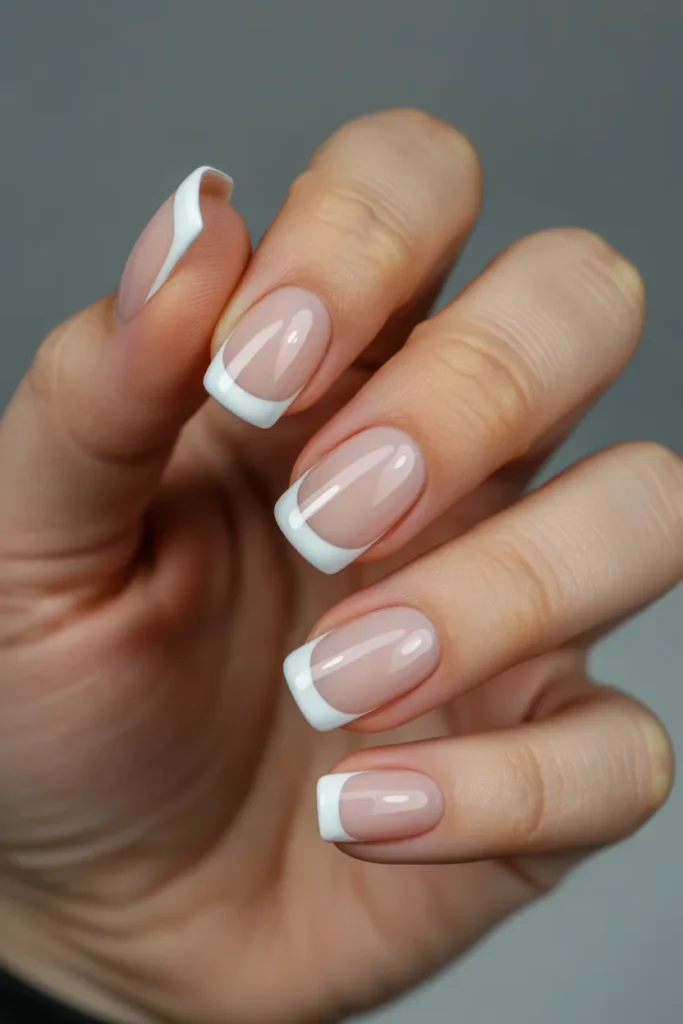
French tip nails, square shape, replace the classic curved smile line with a straight horizontal white tip that follows the flat square edge. The result is more graphic and contemporary than the curved version.
The straight-edge French tip on square nails uses straight nail tape rather than curved French guides. The white tip should be level and consistent in width across all nails — use a ruler or nail tape as a guide for the most precise result.
6 of 20 Pink and White
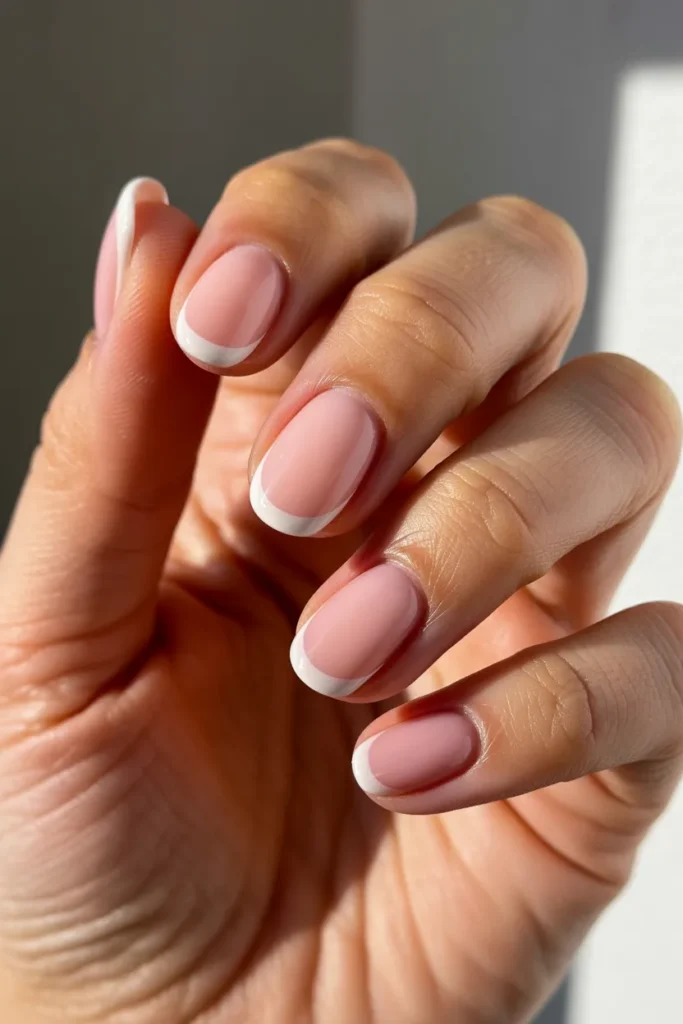
Pink and white French tip nails deepen the base from standard sheer nude to a visible soft pink — this warmer version photographs with more presence while maintaining the French manicure’s fundamental elegance.
Choose a pink base with warm undertones rather than cool baby pink — warm pink coordinates with the white tip more harmoniously. CND Shellac in Cake Pop and Beetles Gel in Rosy Pink both provide the ideal warm-pink French base.
7 of 20 Floral Accent
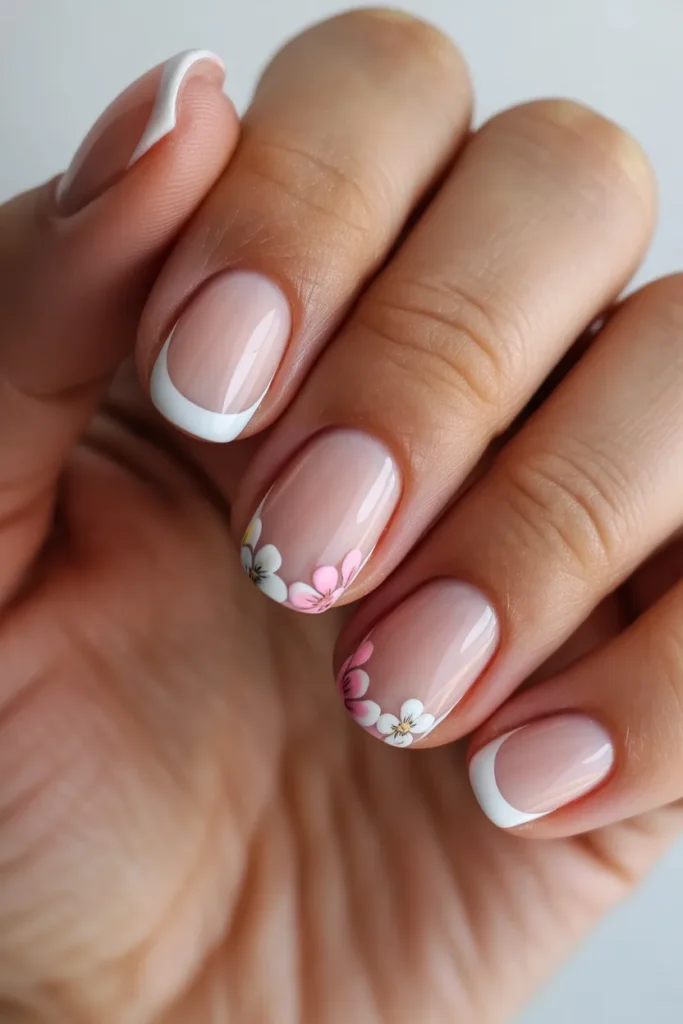
French tip nails with design work best when the artwork is placed within or at the tip boundary — flowers, vines, or fine line art on the white tip creates a cohesive design rather than competing additions.
Paint tiny five-petal flowers in pink gel paint at the corner of the white French tip using a fine liner brush. The flowers sit within the white tip area rather than on the nude base — this integration makes the design feel unified rather than layered.
8 of 20 Layered Lines
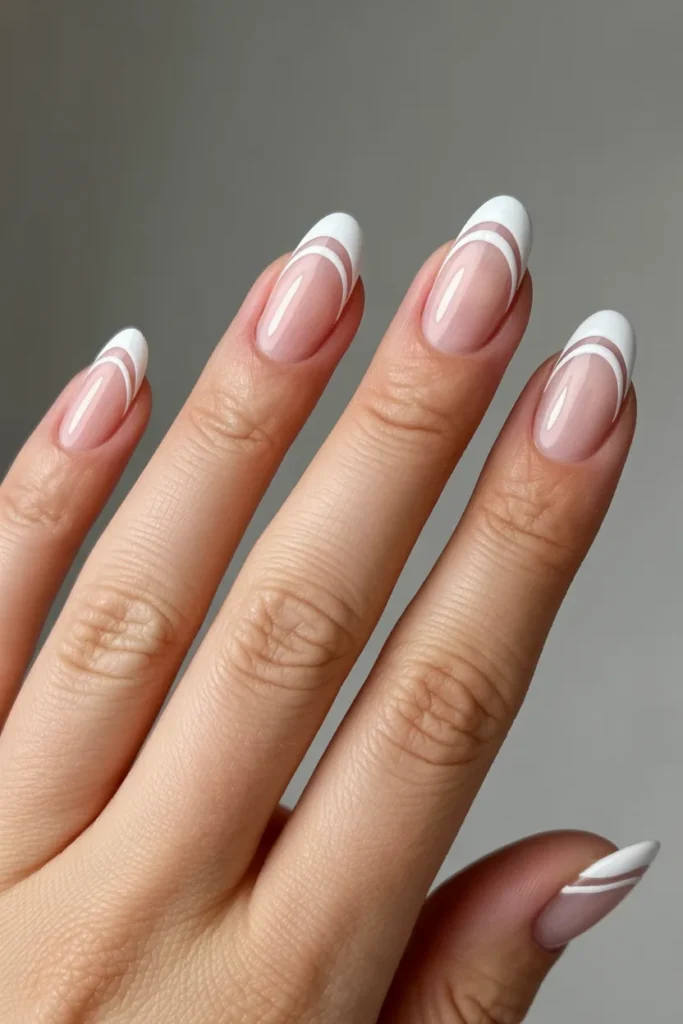
Double French tip nails add a second, thinner white line above the primary smile line, creating a layered depth that reads as architectural and contemporary — a clear 2026 nail design direction.
Apply the primary French tip first, cure and seal. Then apply a thinner secondary white line 1mm above the primary tip using a nail art liner. The spacing between the two lines should be consistent across all nails. Cure the liner layer before the final topcoat.
9 of 20 French Tip Nails Coffin
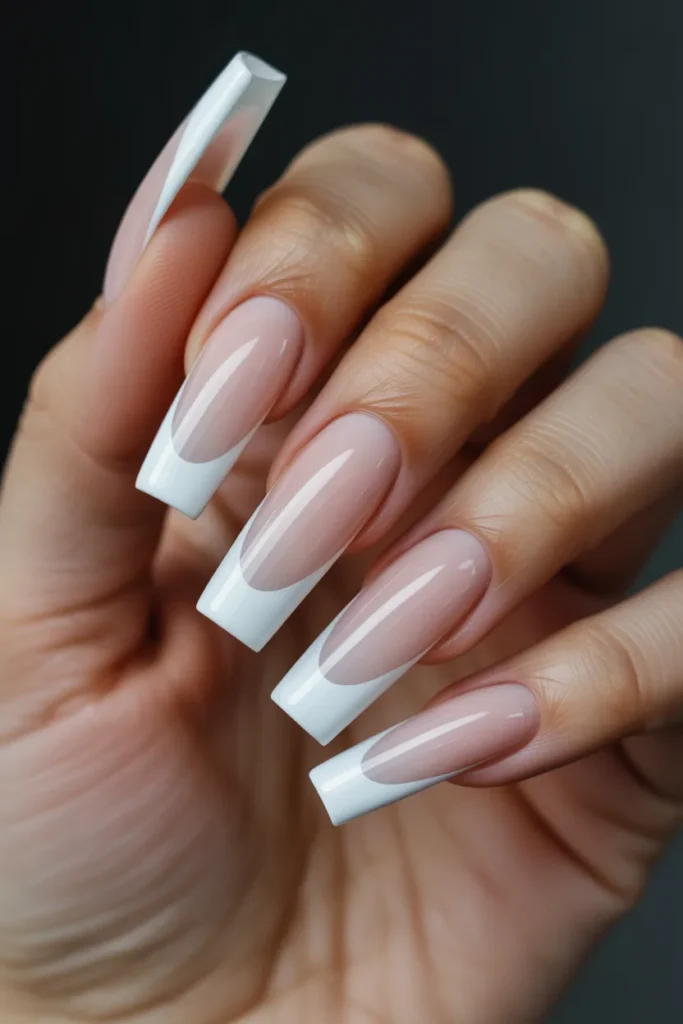
French tip nails coffin shape at long length create a specific kind of elegance — the wide flat tip makes the white smile line appear as a clean geometric element at the end of an extended canvas.
Long coffin French tips require consistent tip width across all ten nails — inconsistent smile line placement is immediately visible at this length. Use curved French guides and apply them at identical nail positions. The coffin width means the white tip can be slightly wider than on oval shapes.
10 of 20 Luxury Metal Alternative
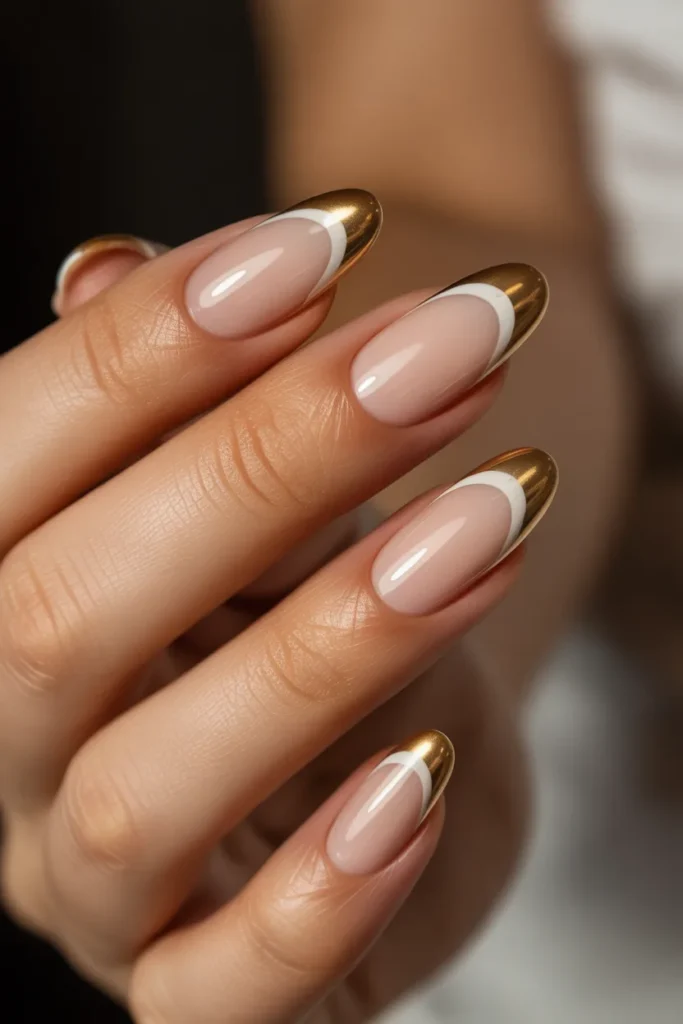
Gold French tip nails replace the white with warm metallic gold — the result maintains the French manicure structure while shifting from classic to luxury. Particularly strong for evening and formal occasions.
Apply gold gel paint at the tip using curved French guides. Alternatively, use gold chrome powder applied over a white French tip sealed with no-wipe topcoat — the chrome version produces a mirror-finish gold more vivid than paint alone.
11 of 20 Practical and Polished
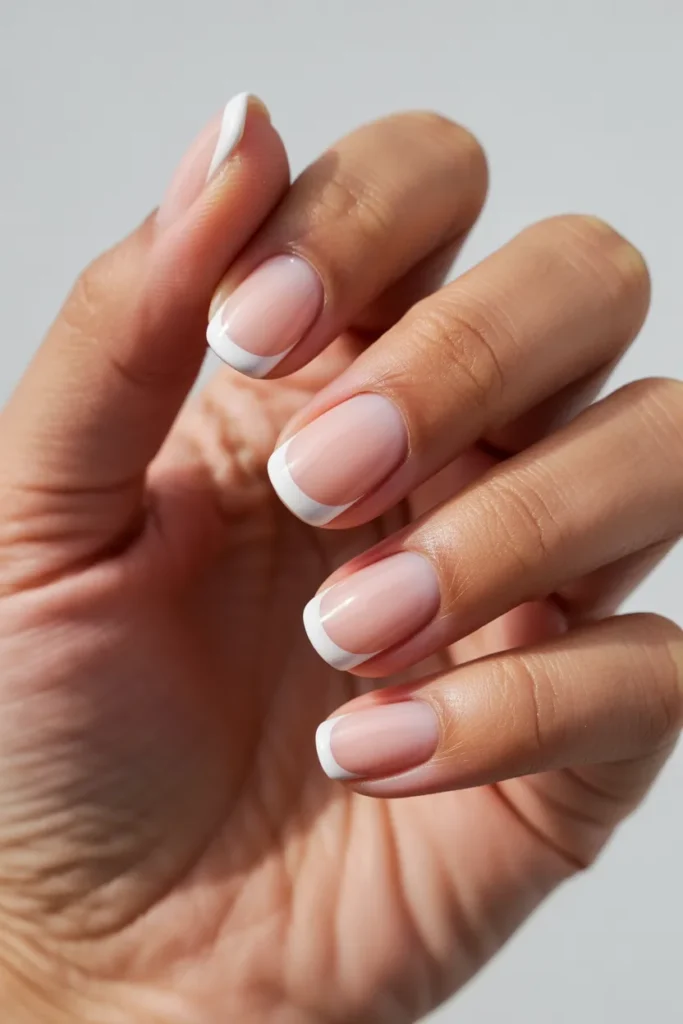
French tip nails are the most practical manicure for active lifestyles — the tip adds polish to the shortest nail without requiring any length. The classic French works on every nail size.
On very short nails, keep the white French tip to 1.5 to 2mm maximum. A standard-width French tip on a short nail makes the nail appear shorter and wider. The micro French tip version works particularly well on very short, rounded nails.
12 of 20 Sparkle at the Edge
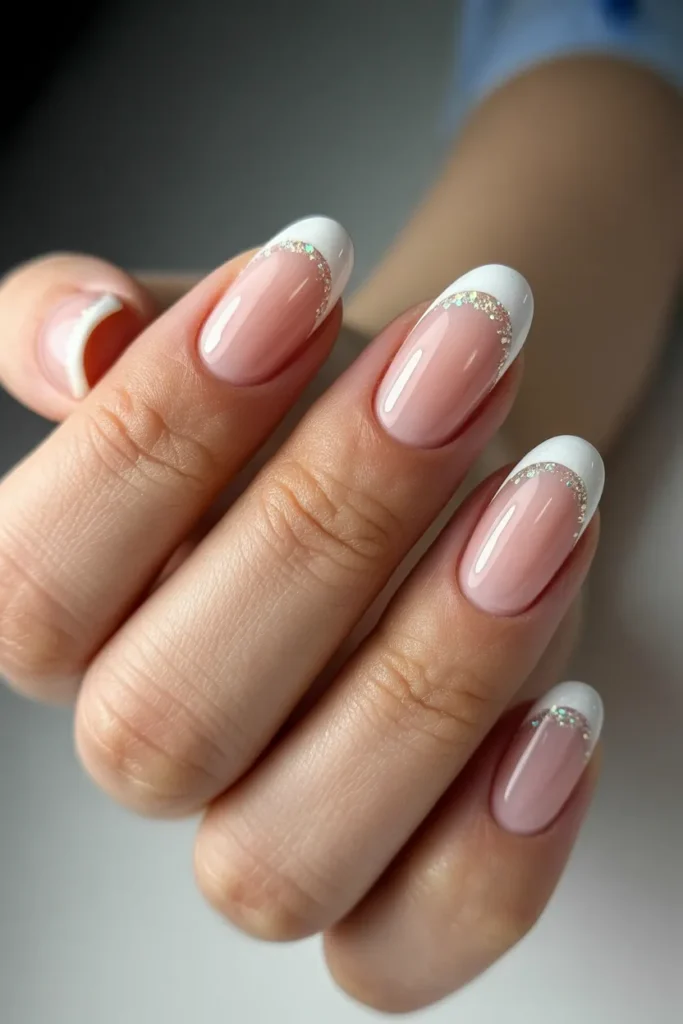
Glitter French tip nails add fine sparkle to the white tip without covering the entire nail — the restraint is what makes this design work. Glitter concentrated at the edge creates elegance, not excess.
Apply standard white French tip, cure and seal. Apply a thin layer of clear gel over the white tip only, press fine iridescent glitter into the wet gel, cure, then seal with topcoat. The glitter bonds within the tip boundary for clean, contained sparkle.
13 of 20 Ombre Gradient Smile Line
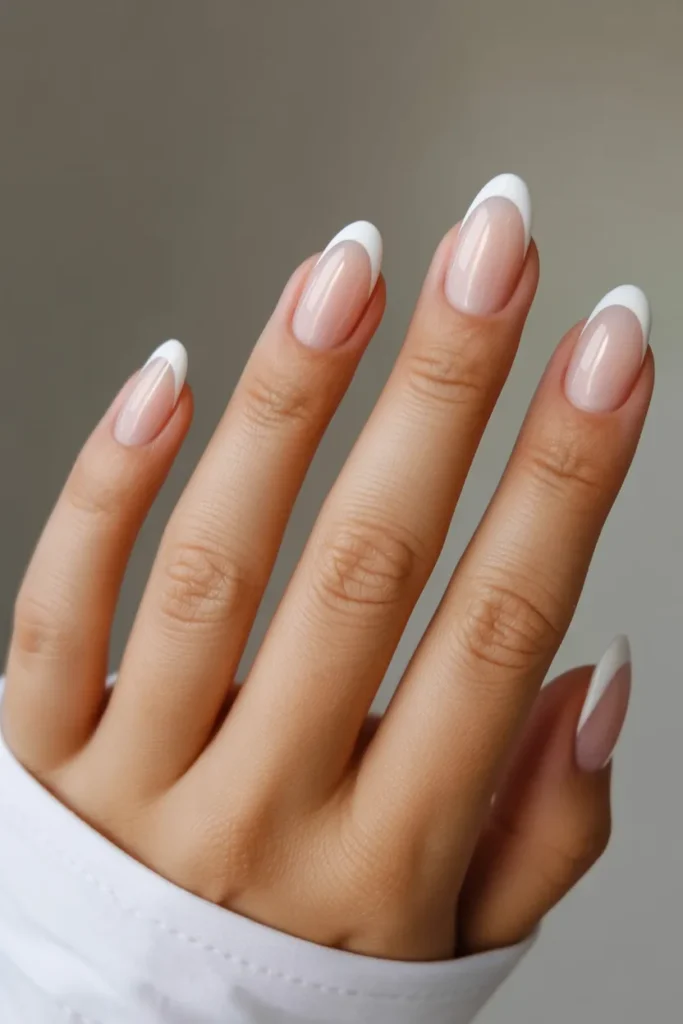
Ombre French tip nails dissolve the hard smile line into a gradient — the nude base fades into white at the tip through a soft sponge-blended transition. The result looks organic and modern.
Apply nude gel base, cure. Sponge-stipple white gel paint from the tip inward using a small makeup sponge, curing after each pass until the gradient reaches the desired softness. No guide tape needed — the gradient is the design. Seal with high-gloss topcoat.
14 of 20 Occasion Elegance
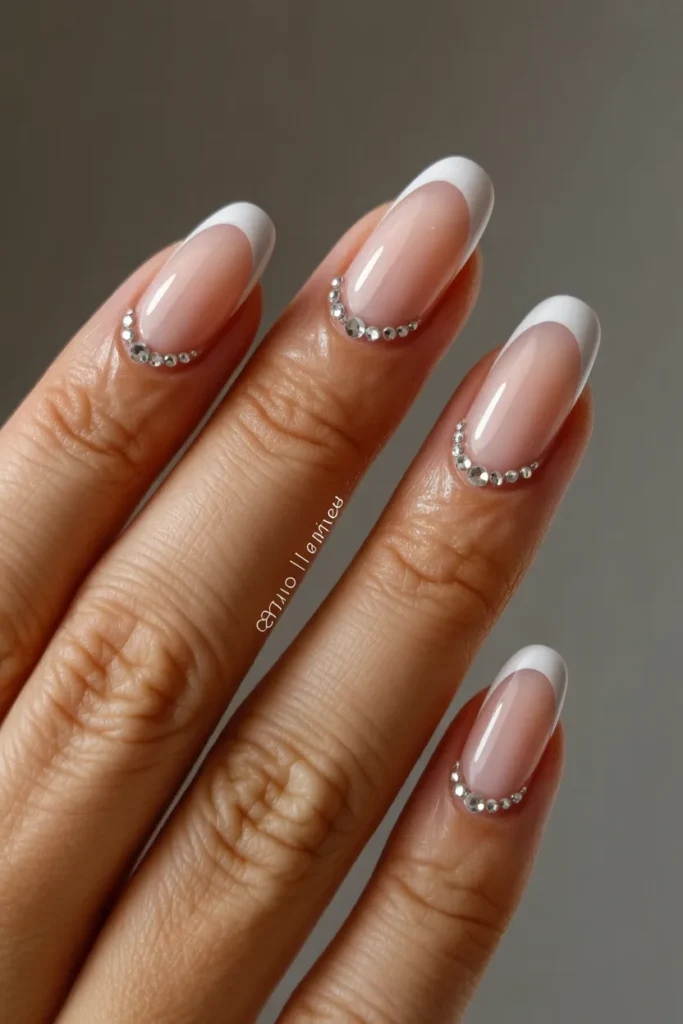
French tip nails with rhinestones along the smile line add luxury to the classic without altering its fundamental elegance. A single row of small crystals at the tip boundary is quietly spectacular.
After applying and curing the white French tip, apply small rhinestones along the smile line using a small gel bead for adhesion. Cure to lock them, then apply the final topcoat carefully around each crystal without covering the top face.
15 of 20 Oval Long
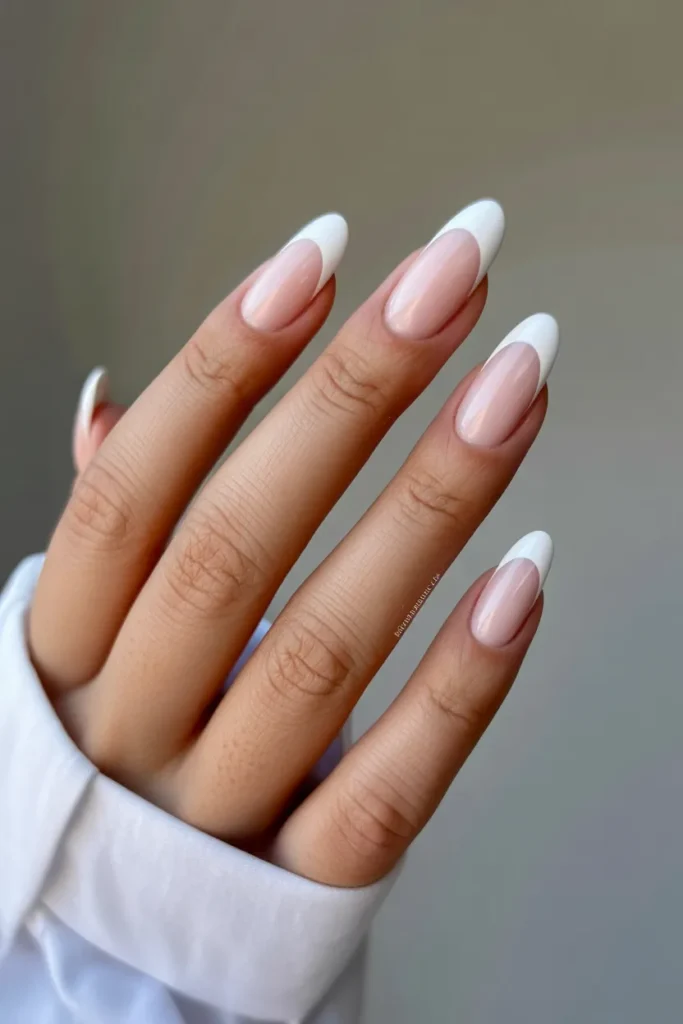
Long oval French tip nails are the most classically elegant version of this design at extended length. The tapered oval tip and white smile line together create continuous visual movement from cuticle to tip.
The challenge with long oval French tips is maintaining the smile line curve consistently as nail length varies finger to finger. Always file all nails to match the length and shape before applying guides to ensure the smile line appears at the same relative position on every nail.
16 of 20 Acrylic Structured Extension
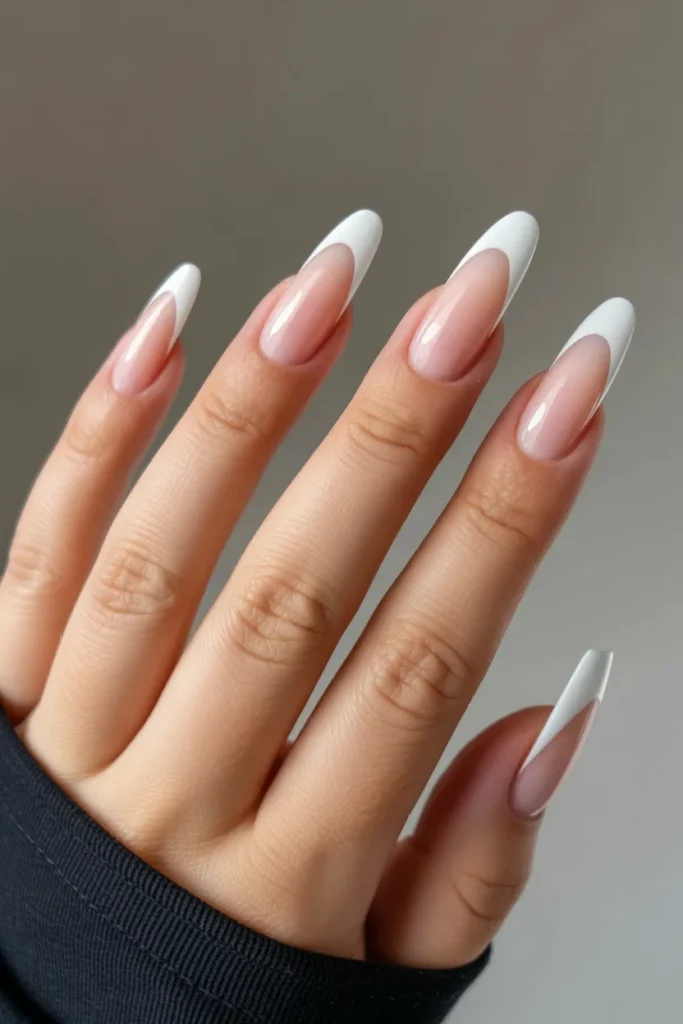
French tip nails acrylic sets build the white tip structurally into the extension rather than painting it on — the result is the most durable and white-stable version of the French manicure available.
Acrylic French tip sets use white acrylic powder at the tip and natural or pink powder at the base, blended at the smile line during application. Book specifically for acrylic French nails and bring a reference photo showing your preferred tip width and smile line curvature.
17 of 20 Inverted Elegance
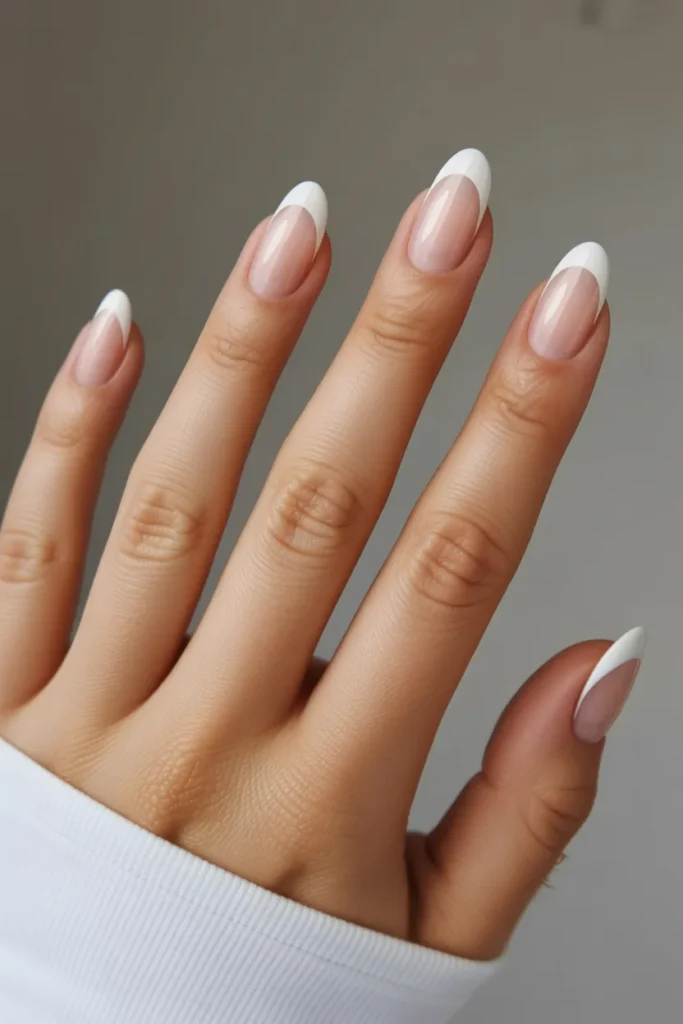
Reverse French tip nails move the white from the nail tip to the cuticle area — a white crescent where the lunula meets the nail base creates an architectural inversion of the traditional design.
Apply sheer nude gel, cure. Mask the lunula area with a curved sticker cut to the crescent shape. Apply white gel over the masking, remove before curing for a clean edge. Seal with topcoat. The reverse French reads as editorial and genuinely original.
18 of 20 French Tip Nails with Nail Art
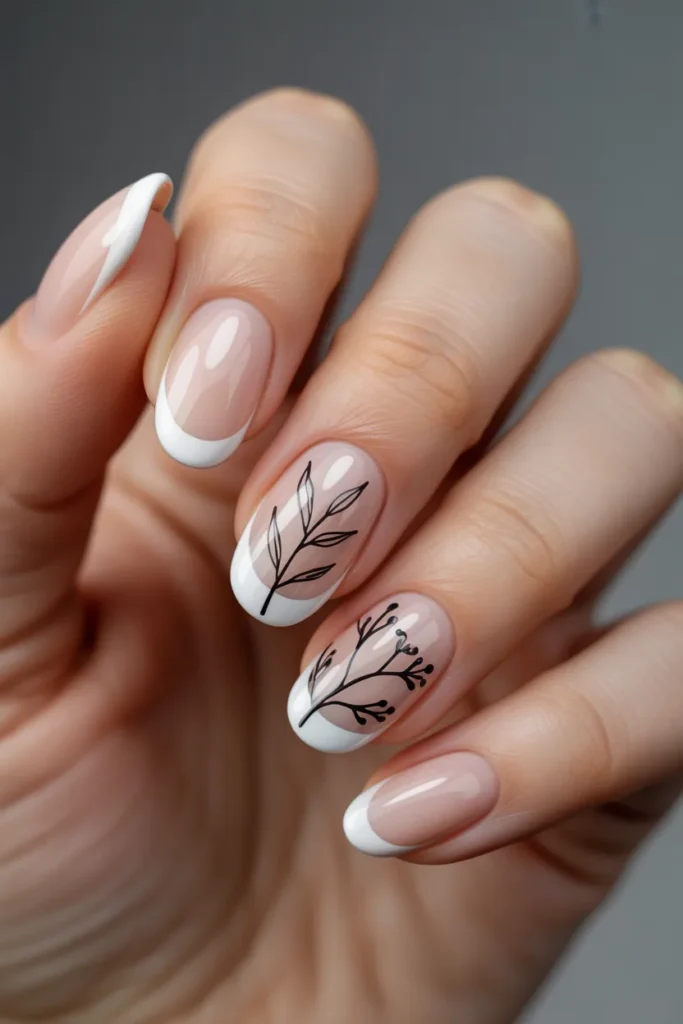
French tip nails with nail art on the nude base rather than the tip create a two-zone design — classic white edge above, botanical illustration below. The white tip frames the art at the top of each nail.
Apply the French tip first and cure fully. Then paint botanical line work — thin stems, small leaf strokes, single-petal flowers — on the nude base using a 6/0 liner brush with black gel paint. The art zone and the white tip zone read as distinct, complementary elements.
19 of 20 Pastel Coloured Variation
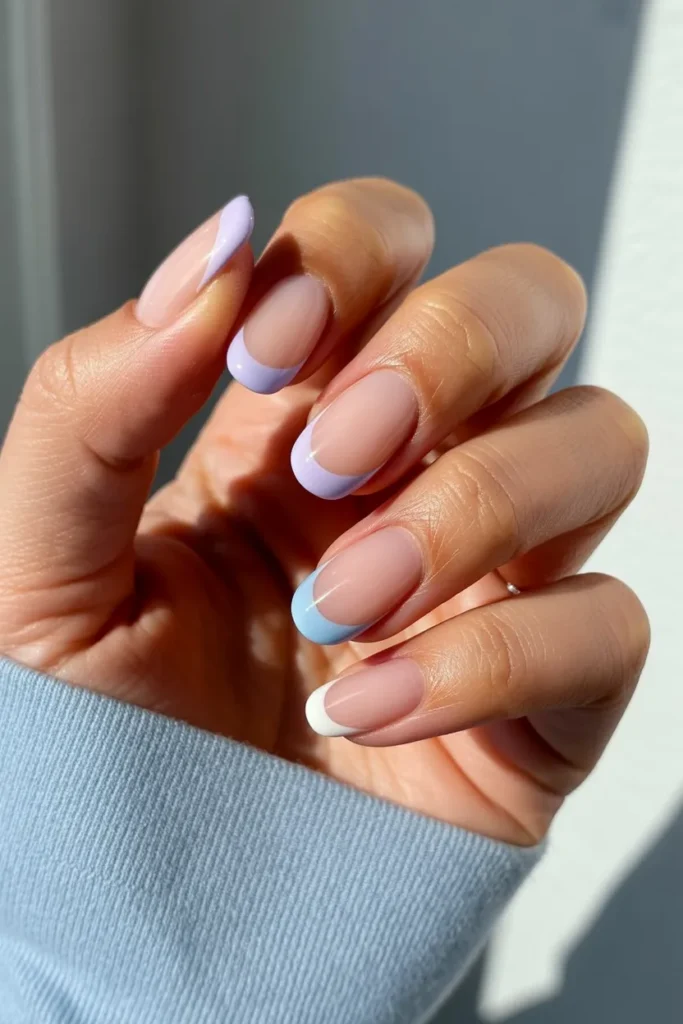
Spring French tip nails replace the classic white with soft seasonal pastels — lavender, mint, sky blue, or peach. The French structure remains identical; only the tip colour shifts to a seasonal palette.
Use the same curved French guide technique as classic white tips. The pastel colour requires two thin coats within the guide boundary for full opacity — most pastel gels are slightly sheer in a single layer. Choose a pastel that coordinates with your current wardrobe.
20 of 20 French Tip Nails 2026 — Chrome Tip Trend
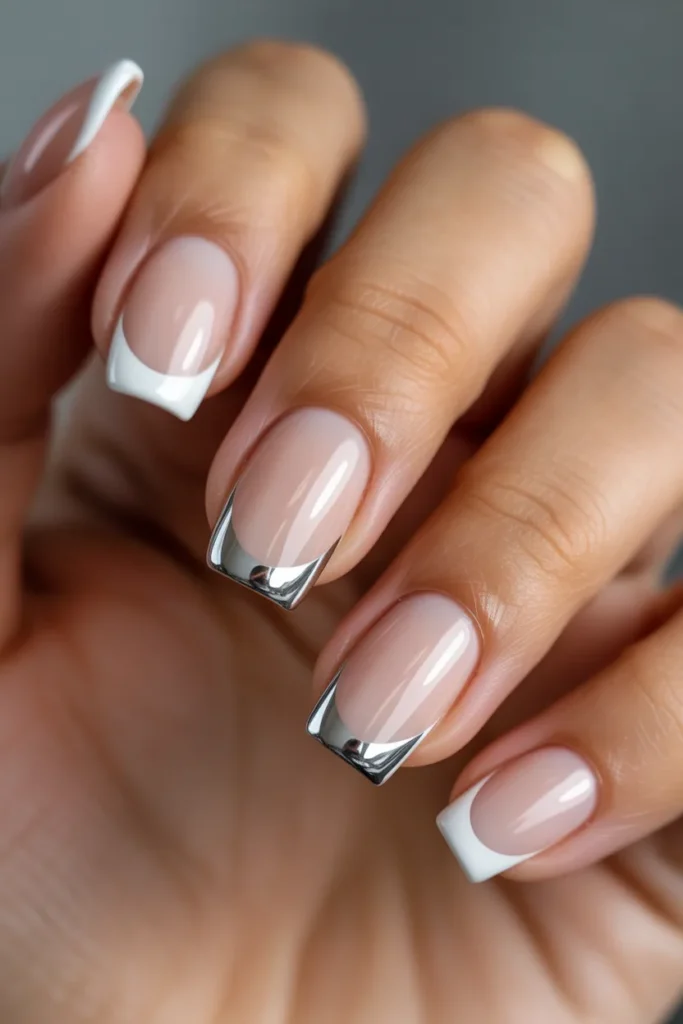
Chrome French tip nails are the strongest 2026 evolution of this design — the white French tip is finished with silver chrome powder, creating a mirror-finish metallic smile line instead of a flat white one.
Apply white French tip, cure, apply no-wipe topcoat over the tip area only, cure, then buff silver chrome powder with a silicone applicator across the white tip. Seal with final topcoat. The mirror-chrome tip reads as the most contemporary French nail direction for 2026.
How to Get a Perfect French Tip Smile Line Every Time
The smile line is the single most important technical element of any French tip design. A wobbly or inconsistent smile line is immediately visible and undermines every other aspect of the manicure.
Cure for 60 seconds, apply no-wipe topcoat in a single smooth pass, cure again. The topcoat both protects the smile line and seals the edge where tip meets base.
File all nails to a matching length and shape before any product application. Inconsistent nail shapes make smile line placement inconsistent regardless of guide precision.
Apply your base coat and two thin coats of nude or sheer gel. Cure fully between each coat. The smile line goes on a smooth, fully cured surface — any tackiness causes guide stickers to lift.
Place your curved French tip guide sticker at identical relative positions on each nail. ‘Identical position’ means the same distance from the nail tip on every nail — not the same distance from the cuticle, which varies.
Apply white gel in a single thin stroke from one side of the guide to the other. Do not press the brush into the guide edge — let the guide do the boundary work. Apply a second thin coat if opacity is insufficient.
Remove the guide sticker BEFORE curing. Curing with the sticker still on locks the gel under the guide edge and creates ragged smile lines. Remove immediately after application.
Frequently Asked Questions
Q: How do you get a perfect French tip smile line at home?
The key is using curved French tip guide stickers and removing them before curing. Place the guide on fully cured base gel, apply thin white gel to the exposed tip, remove the sticker immediately before placing the nail under your LED lamp, then cure. The most common mistake is curing with the sticker still on, which creates torn, ragged edges. Practice on nail tips before attempting on your actual nails for the first time.
Q: What is the difference between French tip nails and French manicure?
French manicure is the broader style — a natural-looking nail with a lighter or white tip. French tip nails refer specifically to the white tip design element applied to gel or acrylic extensions or natural nails. The classic French manicure uses a sheer pink or nude base with a white smile line. Modern French tip designs have expanded to include coloured tips, micro tips, double tips, and chrome variations while keeping the fundamental two-zone structure.
Q: How long do white French tip gel nails last?
White French tip gel nails last 2 to 3 weeks with proper application — base coat, thin coats of sheer base, clean white tip, and UV-protective glossy topcoat. The white tip itself does not chip or fade. The risk is the base gel lifting at the cuticle edge or free edge chipping after 2 weeks. Reapplying a thin topcoat layer every 5 to 7 days extends the manicure without redoing the full set.
Q: What nail shapes look best with white French tips?
Oval and almond shapes produce the most naturally elegant French tips because the curved smile line follows the nail tip’s contour and looks organic. Coffin shapes suit longer nails where the wide flat tip can accommodate a generous smile line width. Square nails suit the straight-edge French tip variation specifically. Short rounded nails work best with micro French tips rather than standard-width ones. The shape choice affects smile line style more than any other factor.
Q: Are French tip nails suitable for beginners?
Yes — with the right tools. The curved guide sticker makes the smile line achievable for beginners on the first attempt. The two-step process (cure base, apply tip over guide) is straightforward. The challenge is guide placement consistency, which improves rapidly with practice. Start with short oval nails and a micro French tip — the smaller the tip, the more forgiving any minor inconsistencies become.
The French Tip — Twenty Versions, One Fundamental Truth
Every design in this list traces back to the same logic: a natural base, a defined tip, and the confidence of a manicure that needs no justification. That logic has held for decades and will keep holding.
Whether you choose the classic white French tip for reliability or the chrome variation for 2026 direction, get the smile line right. That single technical detail determines whether a French manicure looks polished or rushed — and it is entirely within your control.

Victoria Lane
Victoria Lane is a nail enthusiast, digital creator, and the founder of Modern Nail Design. With over five years of researching nail trends, testing techniques, and building one of the web's most active nail inspiration blogs, she writes every article personally. Her goal is simple — give every woman the ideas and knowledge to get nails she genuinely loves.


6 Comments