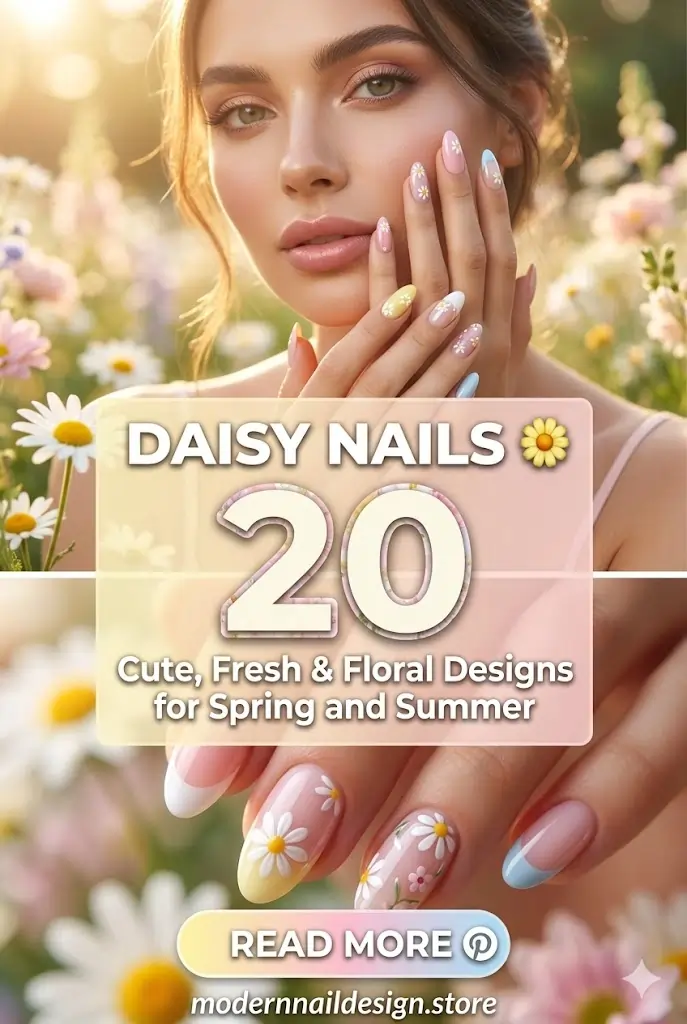
Daisy Nails Cute, Fresh & Floral Designs for Spring and Summer
Daisy nail art was my entry point into nail design. I had zero experience, one dotting tool, and a yellow gel paint from a starter kit. The result looked recognisably like daisies — and I’ve been fascinated by this specific motif ever since.
What makes the daisy nail design so enduring is its perfect balance of simplicity and charm. It reads as handmade in the best way — organic, springlike, and versatile across backgrounds, colours, and nail shapes. These 20 designs cover every version worth knowing.
Why the Daisy Nail Design Works Across Every Season and Skill Level
The daisy motif is the most forgiving nail art subject because slight imperfections read as natural variation rather than mistakes. Real daisies are slightly irregular — so are good daisy nails.
Daisy nail art also crosses every aesthetic zone: minimalist line-art daisies suit clean, professional settings; 3D sculpted daisies suit editorial and occasion wear; dotting-tool daisy clusters suit casual spring and summer outfits: the same motif, entirely different expressions.
1 of 20 White on Yellow Base
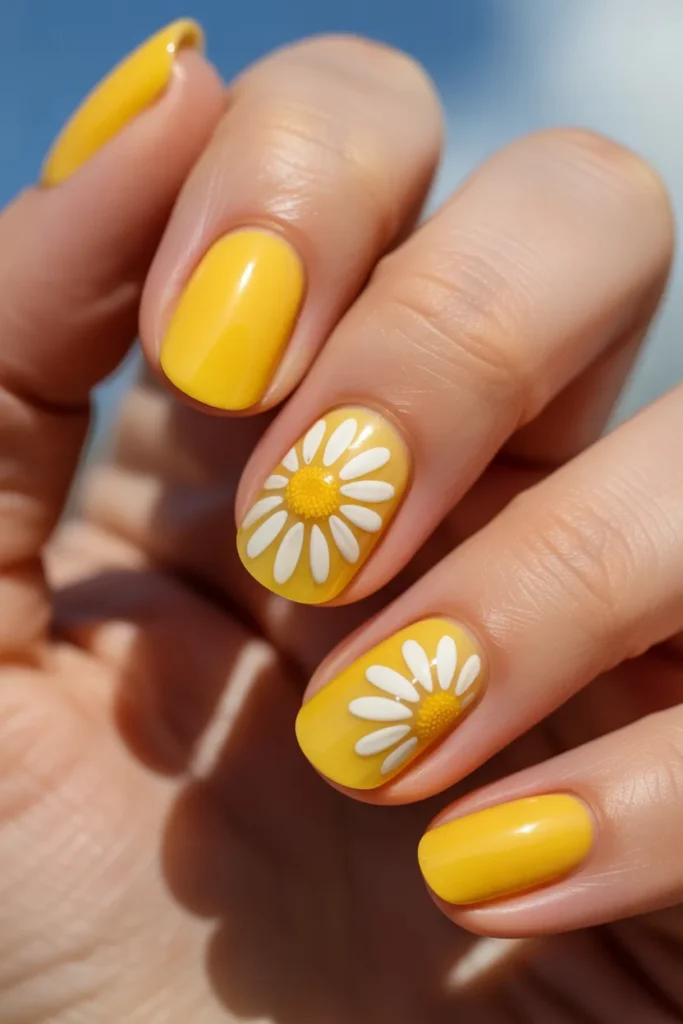
The classic daisy nail — white petals on a yellow base — is the design that started the modern daisy nail trend and remains its most immediately recognisable form. The yellow-and-white combination reads as both sunshine and a meadow simultaneously.
Apply bright yellow gel as the base on all nails. Cure fully. On accent nails, use a fine liner brush to paint five to six white petals radiating from a central point. Add a matching yellow gel dot in the center. The same yellow appears twice — as base and as flower center — creating perfect tonal cohesion.
2 of 20 White Flowers on Nude
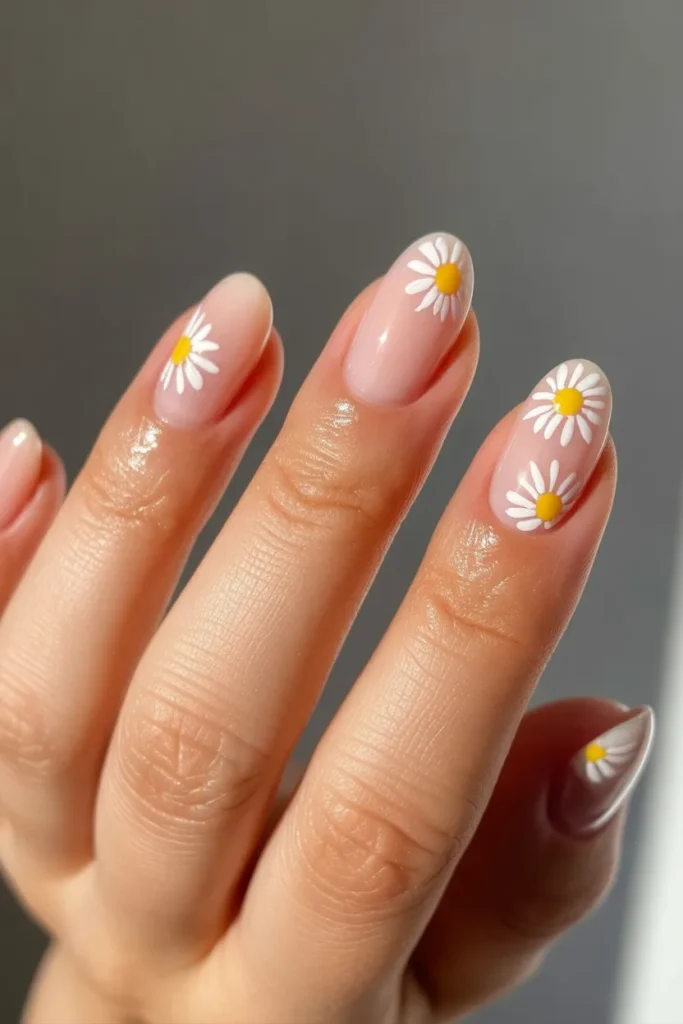
Daisy nails simple on a nude base are the most universally appropriate version — the neutral background makes white daisies appear as a deliberate embellishment rather than a themed design.
Nude base with white daisy accent works in professional settings, casual environments, and formal occasions without adjustment. The minimalist approach removes the seasonal specificity — this design reads as elegantly botanical year-round rather than exclusively spring or summer.
3 of 20 Daisy Nails Pink
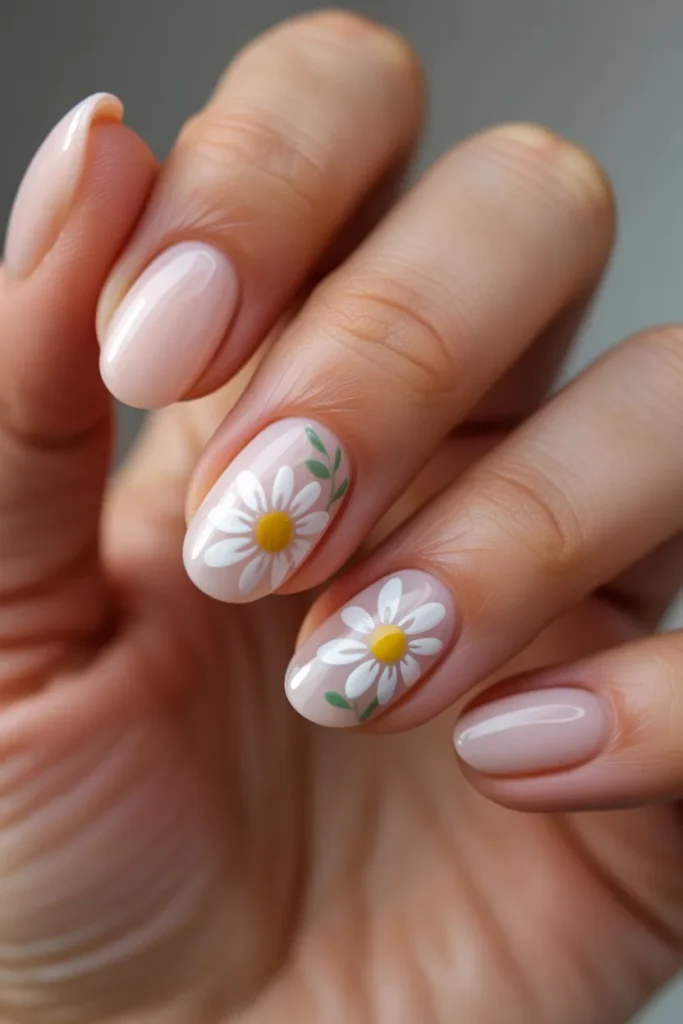
Daisy nails’ pink. Combine the motif with the most popular background colour in nail art — the blush base softens the design and creates a cohesive, warm-toned composition.
Apply blush or rose pink gel base, cure. Paint white daisies with slightly smaller petals than you would on a yellow or white base — the pink reduces the contrast slightly, so scaling up the petal size compensates for reduced colour differentiation between white petals and a pink background.
4 of 20 3D Sculpted Flowers
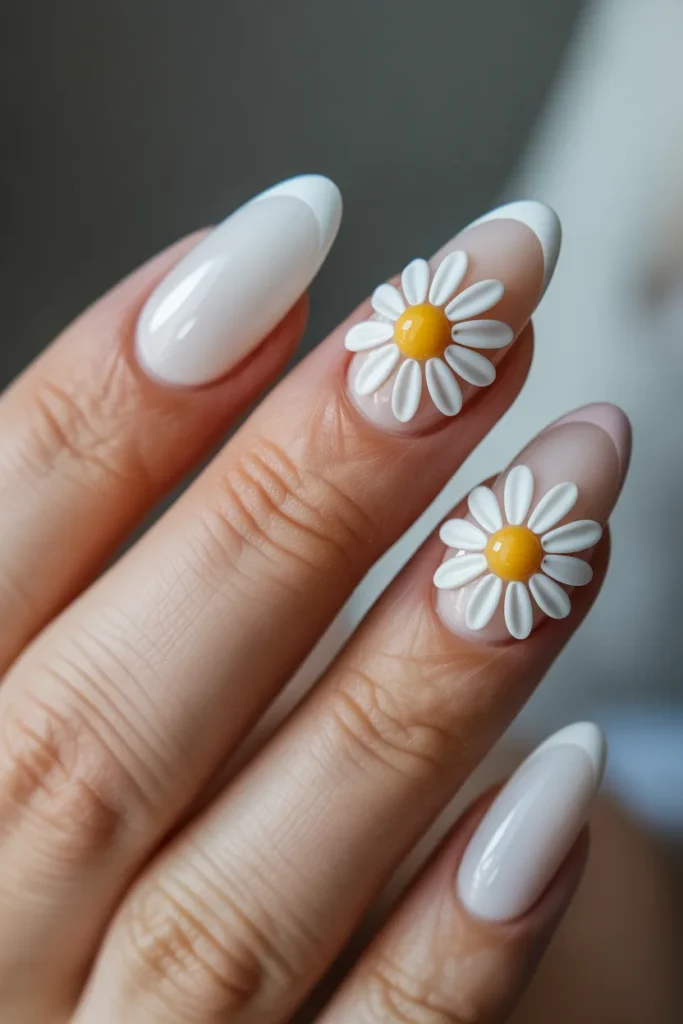
3D daisy nail art sculpts each petal individually above the nail surface — the raised dimensional flowers read as genuinely wearable botanical art and photograph spectacularly in editorial lighting.
Apply builder gel in individual petal strokes radiating from a central point, curing each petal cluster before adding adjacent ones. Build the yellow center as a small dome of yellow builder gel over the cured petals. 3D daisy nail art requires patience but produces the most impressive results of any design in this list.
5 of 20 Botanical Smile Line
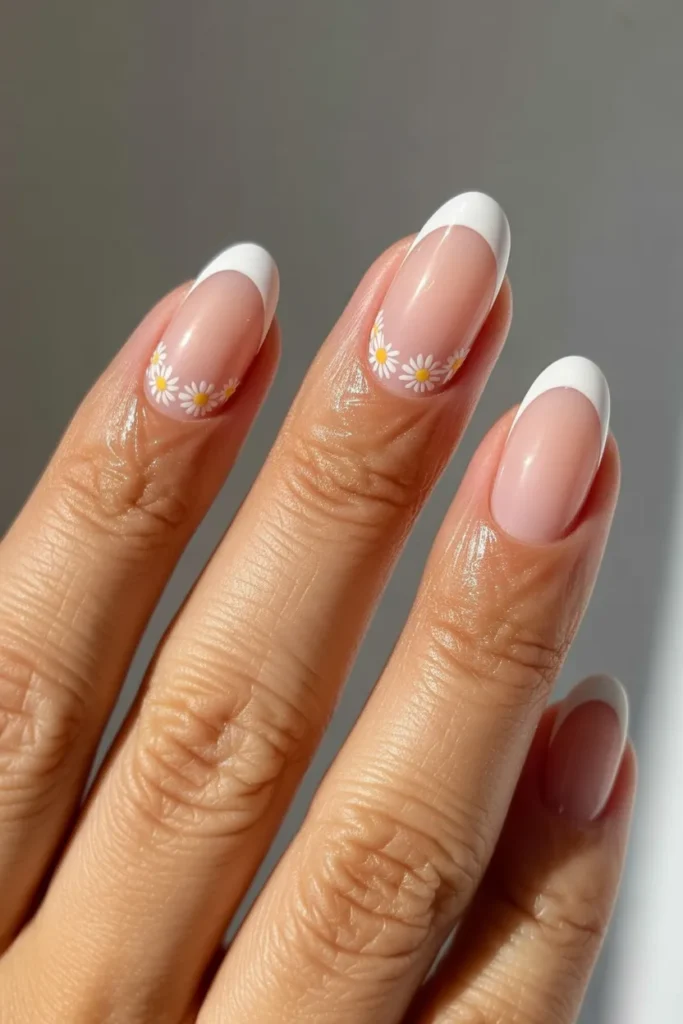
Daisy nails French tip place small flower details at the corner of the smile line — a botanical update to the classic French manicure that reads as refined and fresh simultaneously.
Complete the French tip first and cure fully. Then use a fine liner brush to paint tiny three to four-millimetre daisies at the outer corner of the smile line on accent nails. The daisy should sit within the white tip boundary rather than overlapping onto the nude base for the most elegant result.
6 of 20 Daisy Nails Yellow
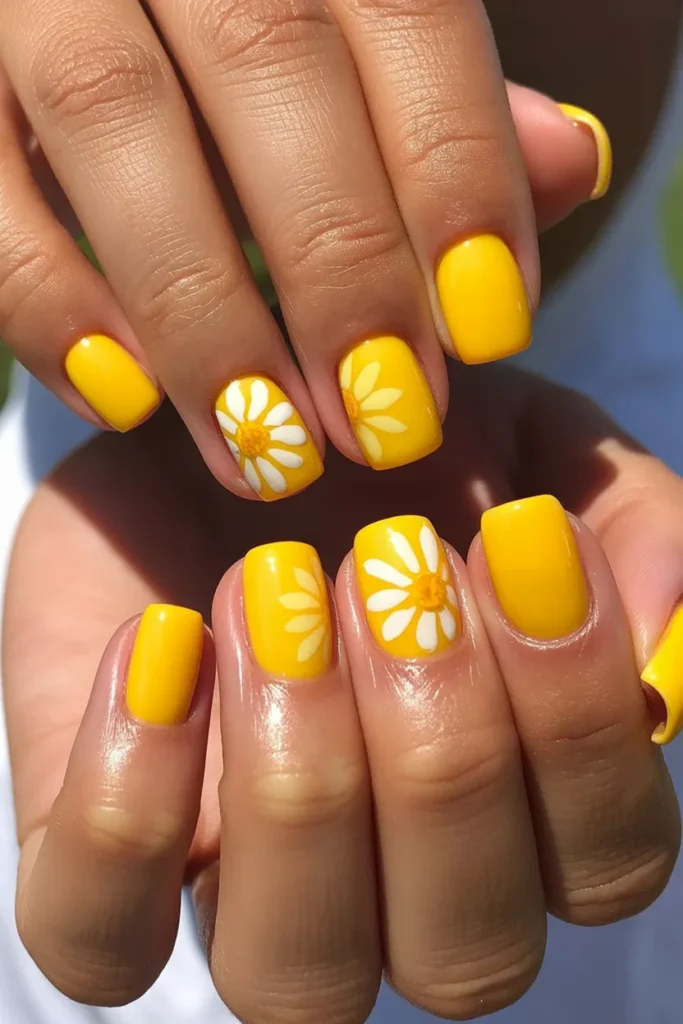
Daisy nails yellow in a tonal all-yellow set create the most vibrantly seasonal version of this design — yellow base, yellow nail art center, white petals providing the only contrast.
The tonal approach works because the daisy motif is so recognisable that even reduced contrast reads clearly as the flower. Apply bright yellow gel as the full base. Paint white daisies in the standard five to six petal format. The yellow-on-yellow centre creates subtle dimensional interest within the tonal composition.
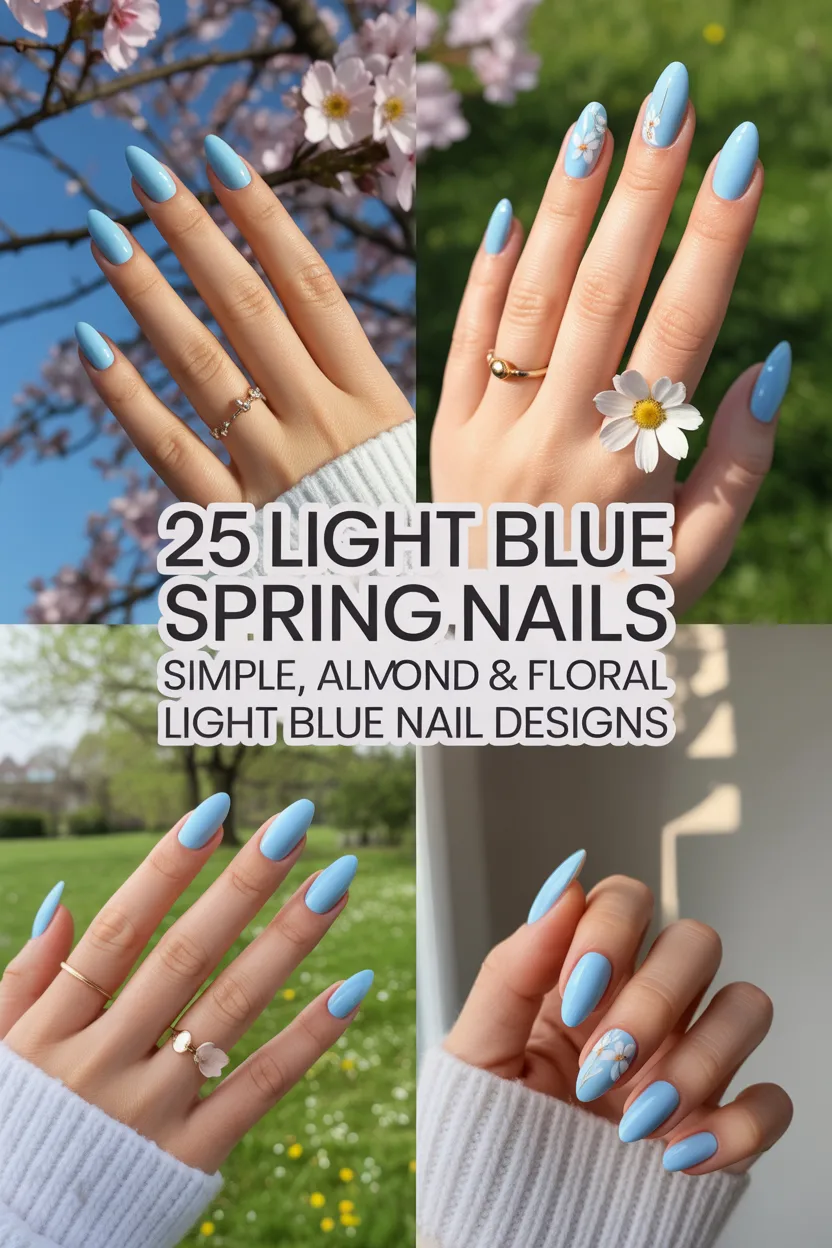
7 of 20 Daisy Nails Blue
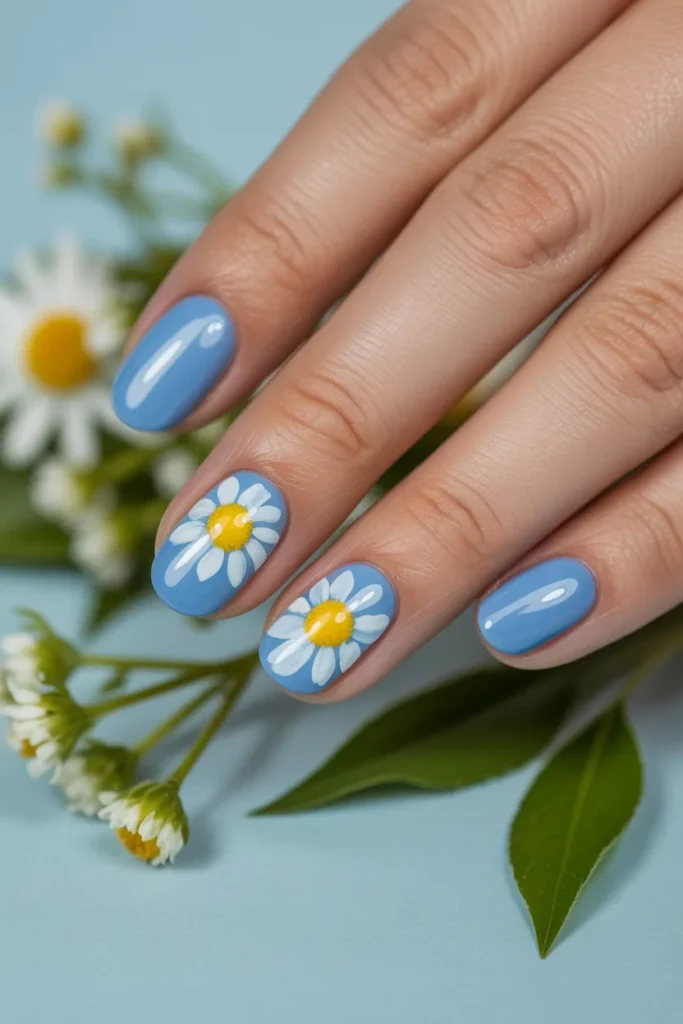
Daisy nails blue create an unexpected colour combination that works beautifully — the blue background reads as sky, positioning the daisies as meadow flowers photographed from below.
Sky blue gel provides maximum petal contrast for white daisy flowers — the blue-to-white contrast is the sharpest available among pastel backgrounds. Daisy DND nail polish or Beetles Sky Blue Gel both deliver the right pastel blue base tone for this combination. The yellow center pops vividly against blue.
8 of 20 Gel Jelly Base with Flower Art
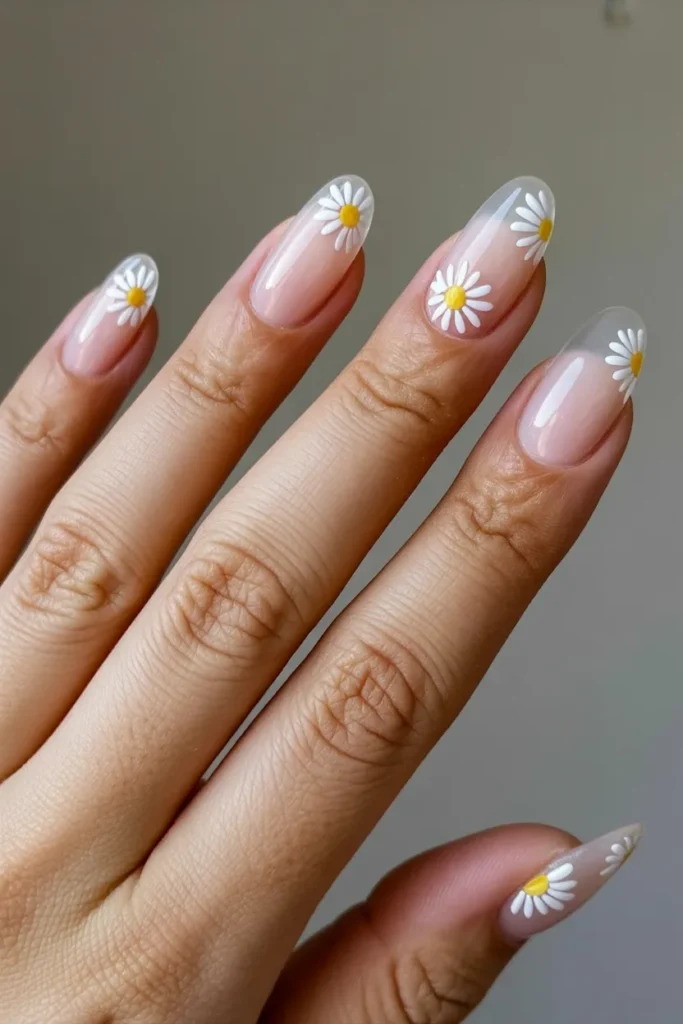
Daisy nails gel on a semi-transparent jelly base creates a modern aesthetic where the flowers appear to float within the nail rather than sit on the surface — the most contemporary interpretation of this design.
Apply three coats of sheer jelly gel to build translucency, cure between each. Paint daisy details directly onto the cured jelly surface using white gel paint. The translucent base allows natural nail warmth to show through, creating a warm-toned background behind the painted daisies.
9 of 20 Short Dotting Tool Method for Beginners
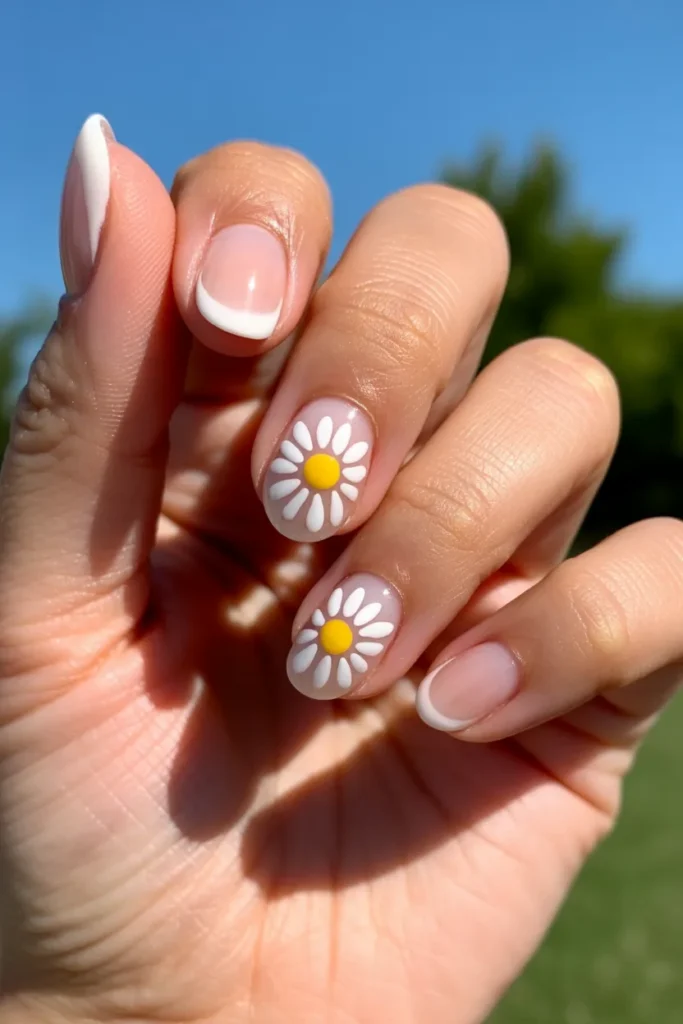
short using the dotting tool method are the most accessible entry point to daisy nail art — achievable on a first attempt with minimal equipment and no freehand painting skill.
Place a yellow gel dot using the large end of a dotting tool as the daisy center. Using the medium end dipped in white gel paint, press five dots surrounding the yellow center at equal spacing. Each white dot becomes a petal. Cure fully and seal. The entire process takes under two minutes per flower.
10 of 20 Acrylic Long Almond Botanical Set
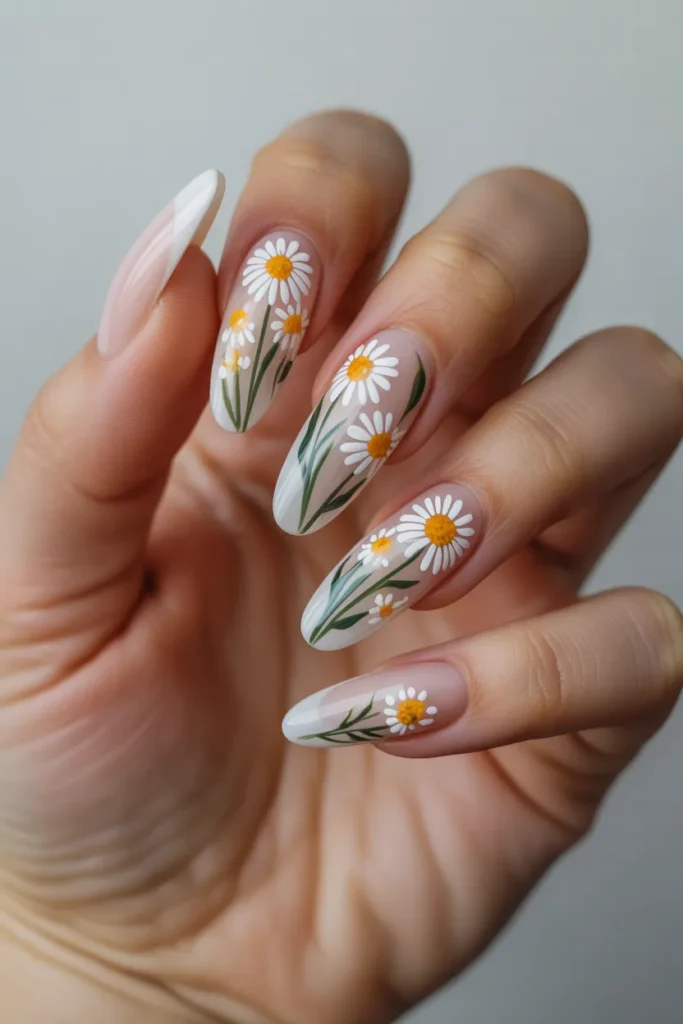
Daisy nails acrylic at long almond length create the most complete botanical nail art — extended surface area allows for multiple flower sizes, stems, leaves, and full garden compositions.
Long acrylic daisy sets benefit from mixed flower scales — a larger primary daisy flanked by smaller secondary flowers and thin connecting stems creates a composition that fills the extended nail length naturally. Bring botanical reference photos to your nail appointment rather than describing the design verbally.
11 of 20 Square Graphic Precision
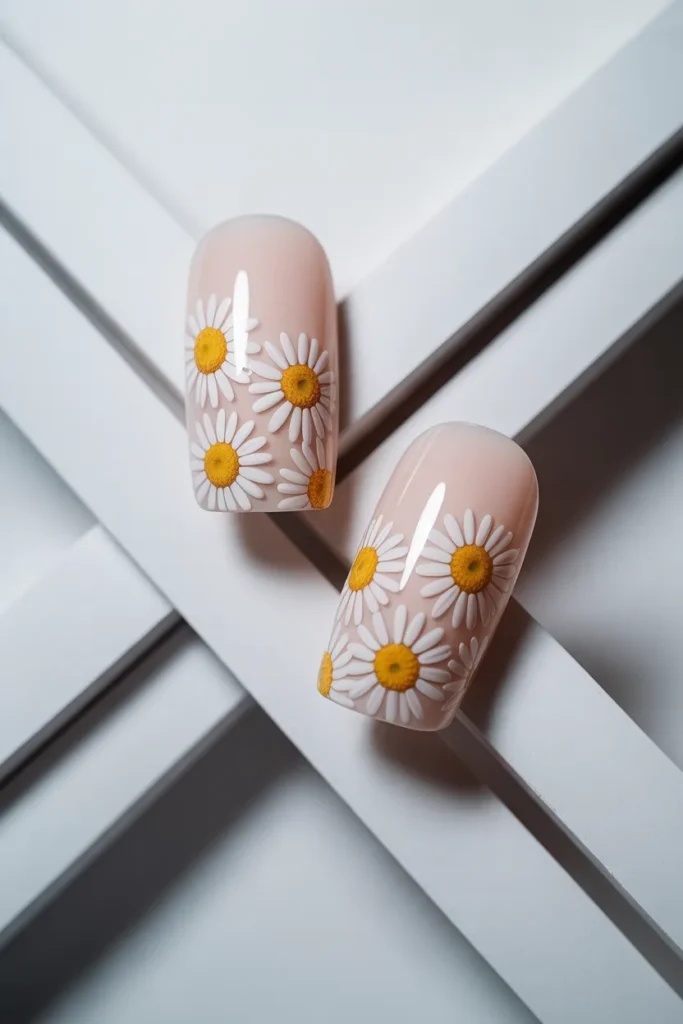
square create an interesting visual tension between the flower’s organic form and the nail’s hard-edged geometric frame — the contrast makes each daisy appear more deliberate and precisely designed.
On square nails, centre daisies within the flat surface rather than placing them toward the tip or cuticle. The equal distance from each edge creates a framed artwork effect — the daisy reads as a botanical print on a square canvas rather than decoration applied casually.
12 of 20 Daisy Nails Almond
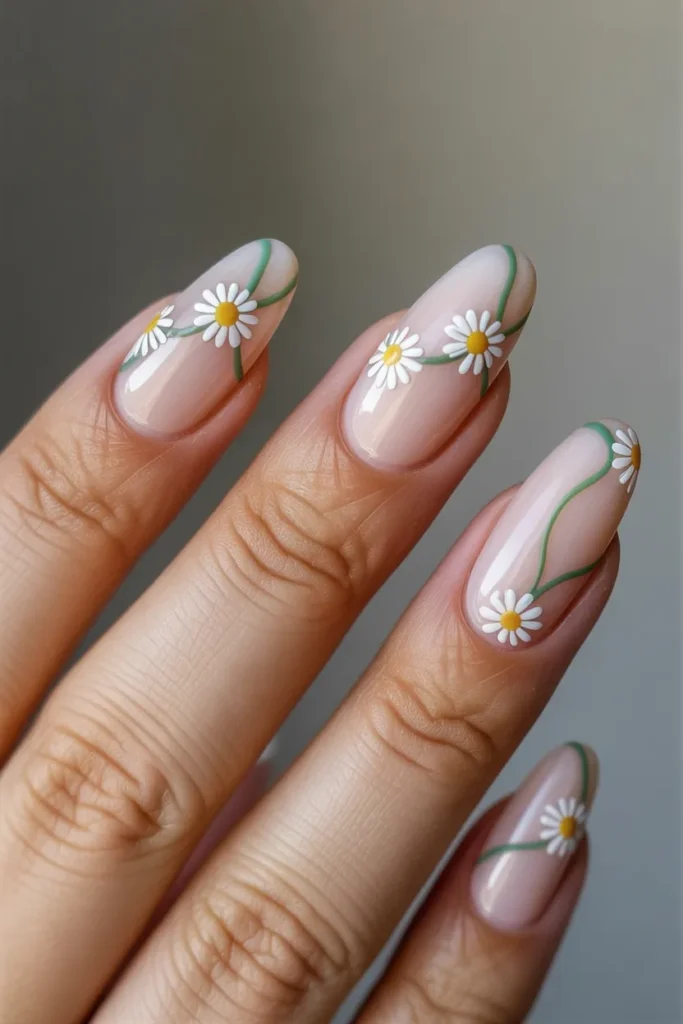
The daisy chain nail design on almond nails creates a botanical narrative where flowers appear connected by living stems — the composition follows the almond shape’s natural length direction.
Paint primary daisies first and cure. Use a fine liner brush to draw thin curved stem lines connecting each flower to the next, following the nail’s length direction. The almond tip provides an ideal focal point for the chain’s direction — the composition naturally pulls toward the pointed tip.
13 of 20 Salon-Quality Detail
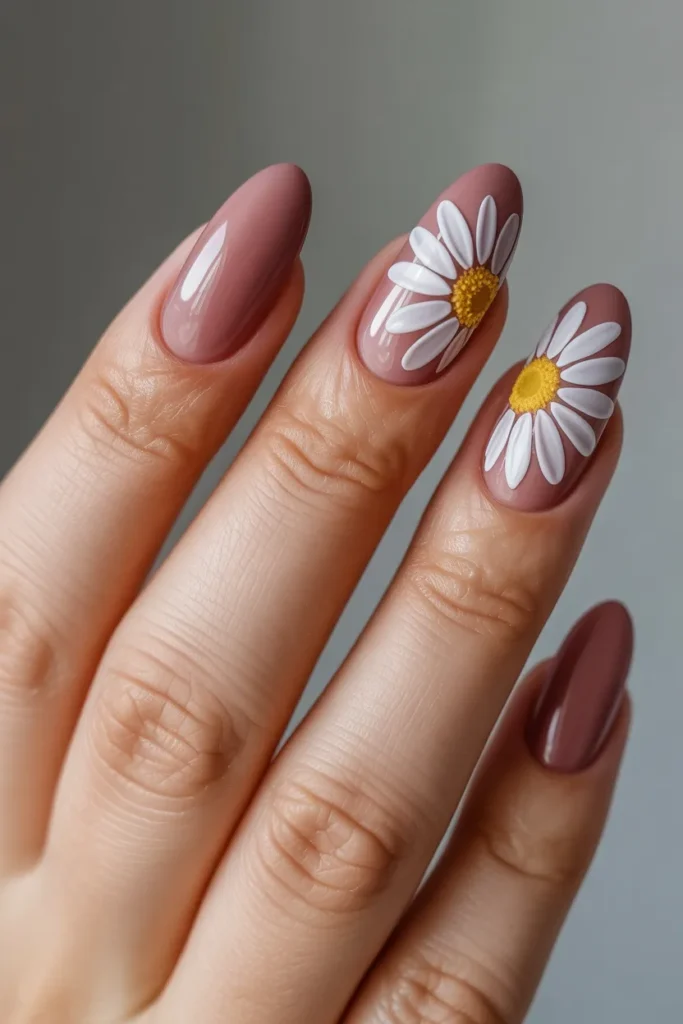
Salon-quality daisy nail art uses petal shading to create dimensional flowers — the technique moves the design from decorative to genuinely fine art inspired by professional daisy nail bar standards.
After painting white petals, apply a tiny amount of pale grey or pale blue gel paint at the petal base using a very fine liner brush while the white is still uncured. The two colours blend slightly at the base, creating shadow depth. This single addition transforms flat white petals into dimensional sculptural flowers.
14 of 20 Bee Accent
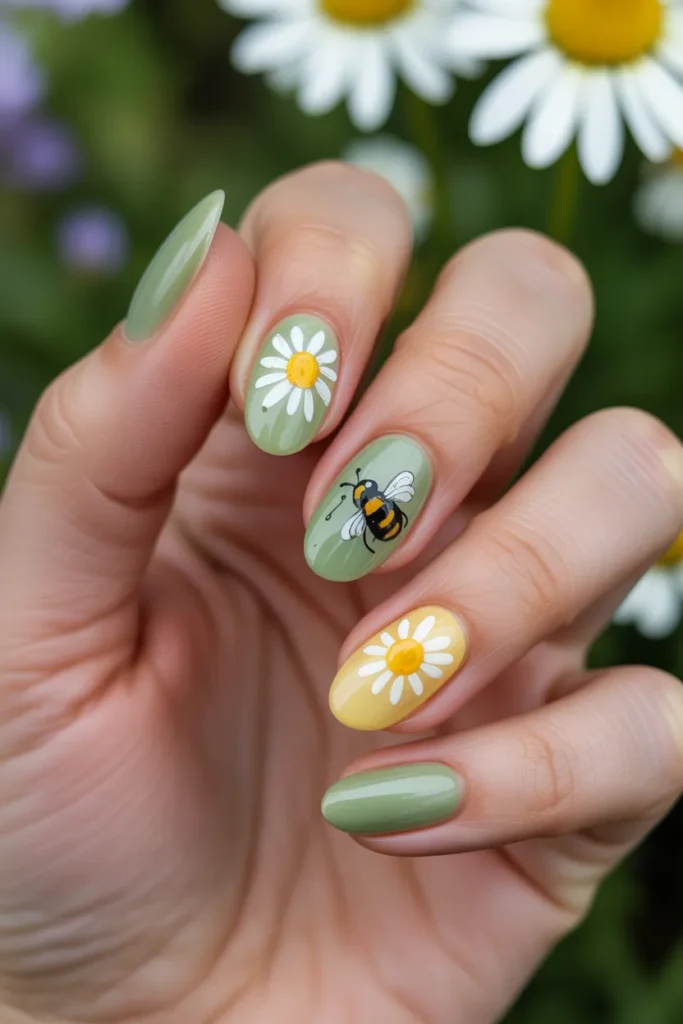
Daisy nails with a bumblebee accent on one nail create a complete garden narrative — flowers plus pollinator across the nail set tells a seasonal botanical story that reads as genuinely creative.
The bee is painted using an oval dark brown body, two teardrop white wing shapes, and three small yellow stripe lines across the body. It takes approximately four minutes per nail once the shapes are familiar. Position the bee on one nail per hand alongside the daisy nails for balanced composition.
15 of 20 Daisy Nails by Skin Tone
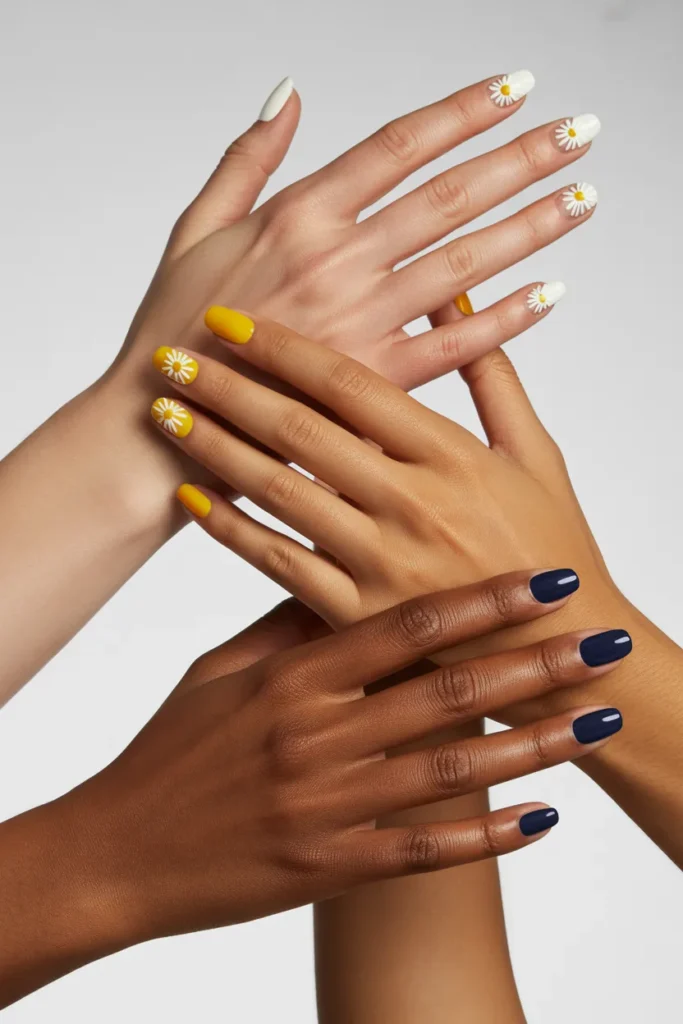
Daisy nail design by skin tone works through background colour selection — the same white daisy motif reads completely differently against white, yellow, and navy bases on different complexions.
Fair skin: white or pastel bases maximise contrast. Medium warm skin: yellow, coral, and warm sage bases harmonise with golden undertones. Deep skin: navy, cobalt blue, or deep forest green bases create the most dramatic daisy contrast — the white petals against dark bases photograph most powerfully on rich, deep complexions.
16 of 20 Daisy Nails Negative Space
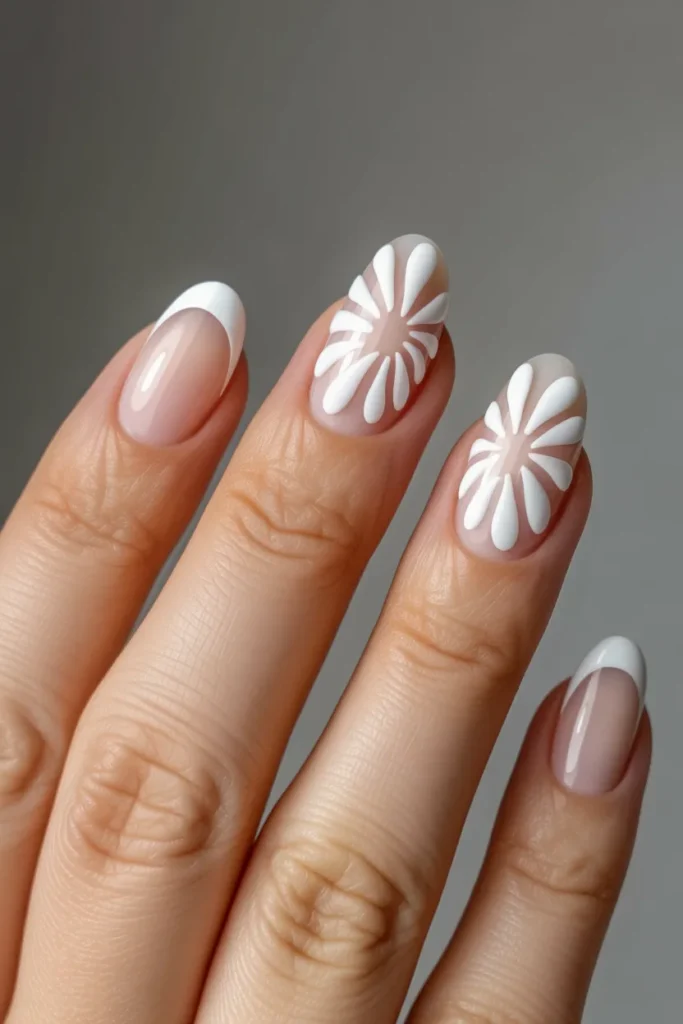
Negative space daisy nails apply the white petals directly onto bare nail with no background colour — the natural nail becomes the background, creating a clean, contemporary interpretation of the motif.
Apply white gel in individual petal strokes on bare, prepped natural nail. No base colour needed. Cure. Add a yellow gel center dot. Seal with clear topcoat. The contrast between the white painted petals and the natural nail surface creates a genuinely modern daisy nail design that suits minimalists perfectly.
17 of 20 Best Product for Daisy Art
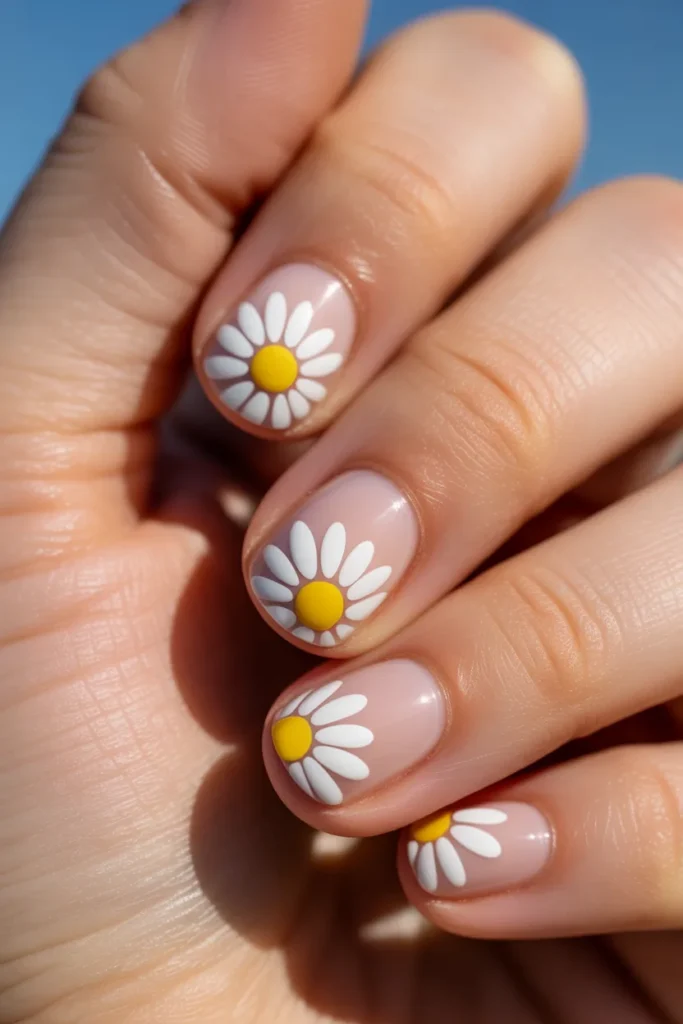
Daisy DND nail polish in white and yellow gel paint formulas are among the most consistently recommended products for daisy nail art — the formula thickness stays precisely where applied.
DND Duo White and DND Duo Yellow are gel polish formulas rather than gel paint, which means they require slightly more care to prevent self-levelling during petal application. Load the brush lightly and apply quickly before the formula begins to flow. DND Gel Paint versions in white and yellow offer better control for detail work.
18 of 20 Watercolour Botanical
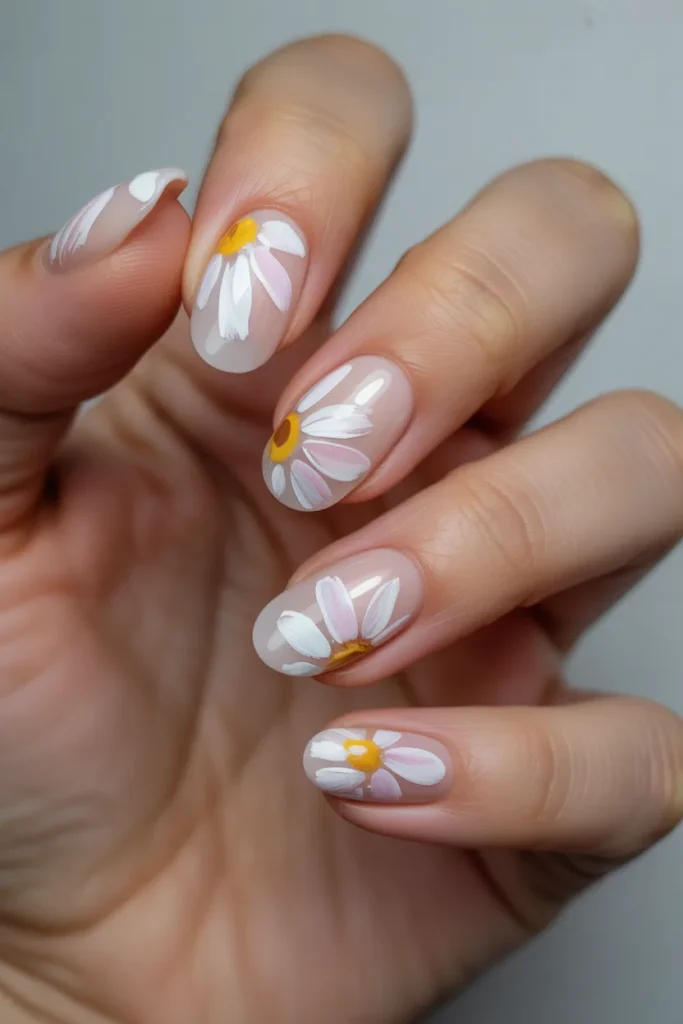
Watercolour daisy nail art uses loose, blended petal strokes rather than precise outlines — the impressionist approach creates a fine-art quality that distinguishes this from standard daisy nail designs.
Apply loose petal shapes using a flat brush loaded with thinned white gel paint in soft, overlapping strokes. Add pale pink tones at petal edges for warmth. Do not attempt precise outlines — the blended edges are the design. Matte topcoat enhances the watercolour painting aesthetic significantly.
19 of 20 Daisy Nails Pink and Purple
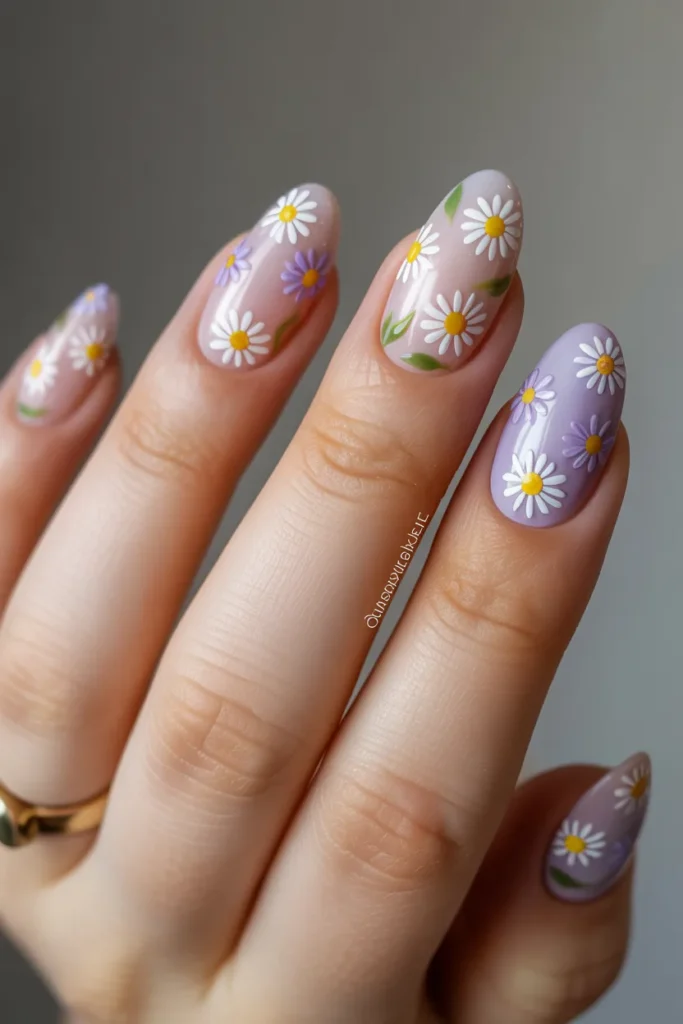
Pink and purple daisy nail designs create a complete spring garden scene with mixed flower types — white and lavender daisies across the full nail set evoke a real spring meadow.
Mix white and pale purple gel paint for the secondary daisy flowers. The primary daisies use white petals; the secondary flowers use lavender petals. Size variation between primary and secondary daisies — larger white ones and smaller purple ones — creates natural botanical hierarchy across the nail composition.
20 of 20 Chrome Base with 3D Flowers
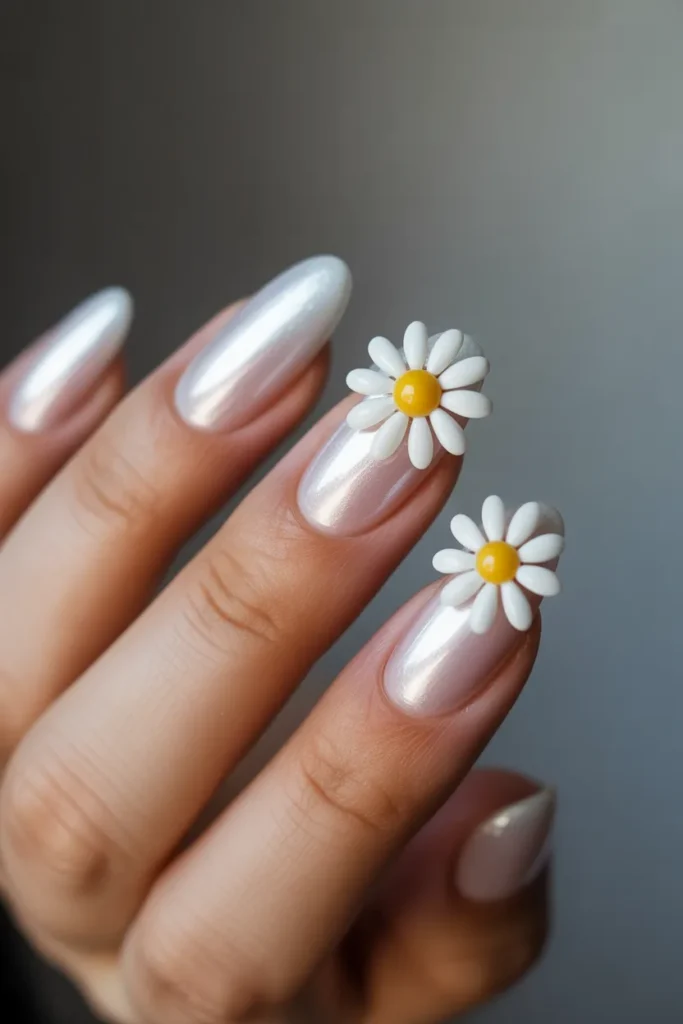
Chrome base with 3D daisy flowers is the 2026 evolution of daisy nail art — the metallic reflective surface creates a halo of light around each sculpted petal that reads as genuinely extraordinary.
Apply pearl chrome over a cured white gel base on almond nails. Sculpt small 3D daisy flowers using white builder gel over the chrome surface on two accent nails. The chrome beneath the flower reflects into the petal gaps, creating a luminous effect that cannot be replicated with any matte base.
How to Paint a Daisy on Nails — Complete Technique Guide
The daisy is the most beginner-accessible nail art motif. Two methods work reliably: the liner brush method for clean defined petals, and the dotting tool method for absolute beginners.
Liner Brush Method:
- Apply base colour, cure fully. Load a fine liner brush (Born Pretty 6/0 or Modelones Ultra-Fine) with white gel paint. Wipe most paint off — the brush should be nearly dry.
- Paint the first petal from the outer edge toward a central point using a short inward stroke. The petal should taper from slightly wider at the outer end to a point at the center.
- Repeat for five to six petals, rotating around the central point, leaving small gaps between petals for realism.
- Add a yellow gel dot at the center using the medium end of a dotting tool. Cure the flower layer for 60 seconds. Seal with topcoat.
Dotting Tool Method (Absolute Beginners):
Cure for 60 seconds. Seal with topcoat. The dotting tool method takes under two minutes and is recognisably a daisy on every first attempt.
Apply base colour, cure fully. Use the large end of a dotting tool to place a yellow dot at the flower center position.
Using the medium end dipped in white gel paint, place five dots at equal spacing around the yellow center — each white dot represents one petal.
View the finished nail from directly above. The widest point should be at or near the cuticle, narrowing consistently toward the tip. No flat spot, no visible corners at the tip.
Frequently Asked Questions
Q: How do you paint daisies on nails for beginners?
The dotting tool method is the most beginner-accessible approach — place a yellow dot as the center, then place five white dots of equal size around it in a circle using a medium-sized dotting tool. Each white dot becomes a petal. The whole process takes under two minutes per flower and produces a recognisable daisy on the first attempt. No brush control required. The liner brush method produces more refined petals but requires practice.
Q: What backgrounds work best for daisy nail art?
White and cream bases provide maximum contrast for white daisy flowers but require a different shade for the petals — pale yellow works better than pure white on white bases. Yellow bases use white petals with matching yellow centers for a tonal effect. Blue and sky blue bases create the sharpest white petal contrast available. Nude bases create the most professional, year-round appropriate version. Dark bases — navy, forest green — create the most dramatic daisy designs for deeper skin tones.
Q: How long do daisy gel nails last?
Daisy gel nails sealed with no-wipe topcoat last 2 to 3 weeks. The painted flower art is protected under the topcoat seal and does not fade or smear independently. The most common longevity failure is the base gel lifting at the free edge or cuticle. Reapply topcoat every 5 to 7 days over the existing set to extend longevity. 3D daisy elements are more vulnerable to physical impact — avoid activities that create direct pressure on the raised petals.
Q: What nail shapes work best for daisy nail designs?
Oval and almond shapes suit daisy nail art most naturally — the curved tip creates an organic frame for the botanical composition. Short oval shapes are the most practical for beginner daisy nail art because the smaller surface area requires fewer flowers per nail. Square shapes create a graphic, deliberate contrast between the geometric nail and organic flower. Long almond nails suit detailed daisy chain compositions where flowers connect across the full nail length.
Q: Can I do daisy nail art without gel?
Yes — regular nail polish daisy art uses the wet-on-wet technique. Apply base colour, wait 90 seconds for it to become tacky, then quickly paint daisy details using a thin detail brush or dotting tool with contrasting nail polish. Seal with clear topcoat immediately. Results last 4 to 6 days. Nail art stickers with daisy designs are another non-gel option — press onto dry polish base and seal with topcoat. Many nail supply platforms on Amazon and Etsy offer good-quality daisy nail sticker sheets.
Daisy Nails — The Motif That Always Delivers
Twenty designs in, the daisy nail motif has demonstrated more range than most people expect from a five-petal flower. The same core shape becomes elegant on nude gel, maximalist on chrome, contemporary in negative space, and luxurious as 3D-sculpted art.
If you have never tried daisy nail art, start with the dotting tool method on a soft yellow or white base. Five minutes, one tool, instantly recognisable result. From that starting point, every other design in this list becomes a natural next step — and the dotting muscle memory you build makes every subsequent version easier.

Victoria Lane
Victoria Lane is a nail enthusiast, digital creator, and the founder of Modern Nail Design. With over five years of researching nail trends, testing techniques, and building one of the web's most active nail inspiration blogs, she writes every article personally. Her goal is simple — give every woman the ideas and knowledge to get nails she genuinely loves.