Marble Nails You’ll Love ✨ 20 Chic, Glossy & Trendy Ideas for 2026
My first attempt at marble nail art was a disaster. I watched three YouTube tutorials, bought the wrong brush, and ended up with something that looked like cracked concrete. The second attempt, three weeks later, was completely different.
What changed was understanding the actual technique — not just the visual result. Marble nails look complex but reward patience over skill. These 20 designs cover every marble variation worth trying, from simple to genuinely impressive.

What Actually Makes Marble Nail Art Look Realistic
Real marble has three components: a base stone colour, primary veining in a contrasting tone, and secondary, thinner veining in a third shade. Nail marble art that captures all three looks genuinely stone-like.
The marble nails technique depends on the application surface. On gel, you paint over a cured base and seal with a topcoat. On regular polish, you work wet-on-wet. Gel marble nail designs last significantly longer and produce sharper veining.
1 of 20 Classic White
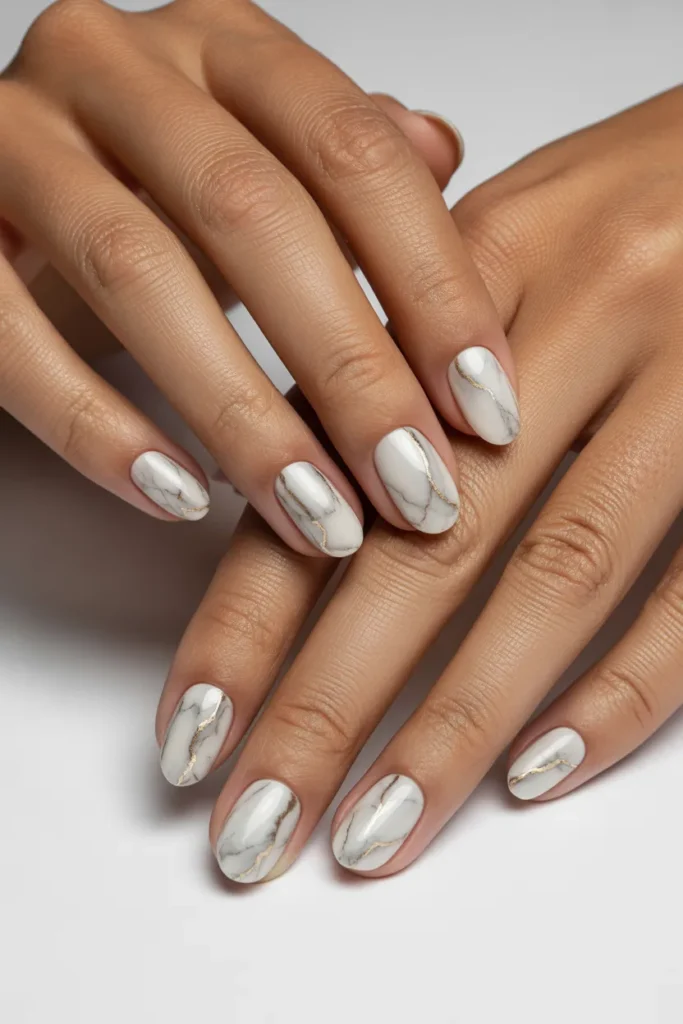
Classic white marble nails remain the most timeless nail art design available. The white base, grey primary veining, and thin gold secondary lines create a look that suits every occasion, from casual to formal.
Apply white gel as the base. Cure. Use a thin fan brush or liner brush loaded with grey gel paint for the primary vein strokes. Add finer gold veins alongside. Cure fully, then seal with glossy topcoat.
2 of 20 Black Marble Nails
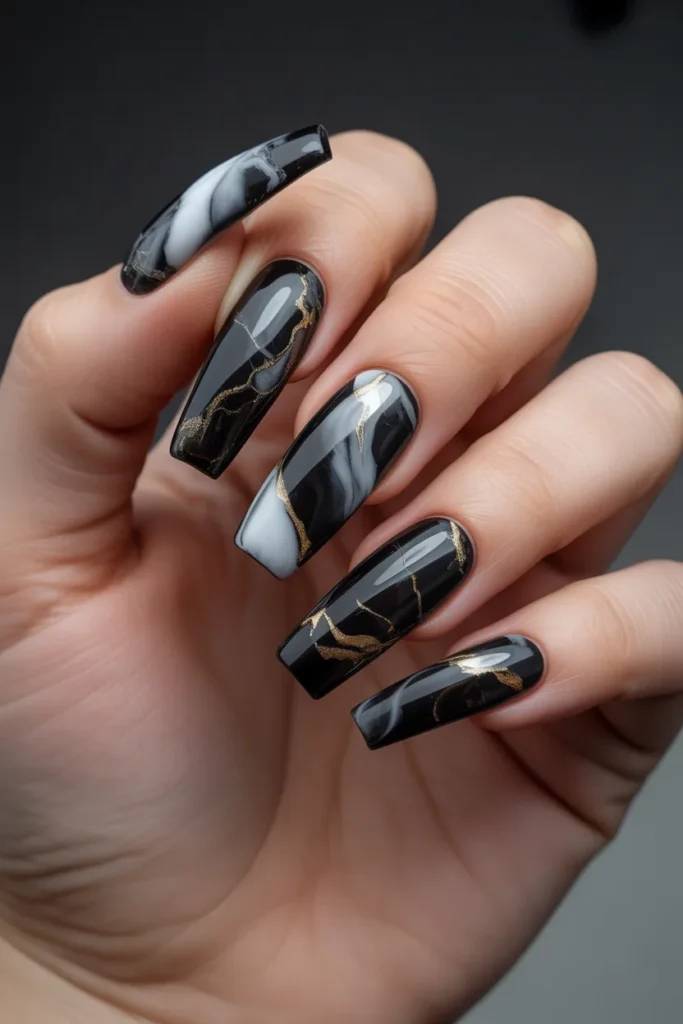
Black marble nails reverse the classic palette — dark base with white and silver veining creates something genuinely dramatic. On coffin nails, the wide flat surface showcases the marble pattern beautifully.
Apply deep black gel base, cure completely. Use white gel paint and a thin liner brush for the primary veins. Add finer silver detail lines alongside. The contrast of black reads as more dramatic than white marble.
3 of 20 Pink Rose Quartz Aesthetic
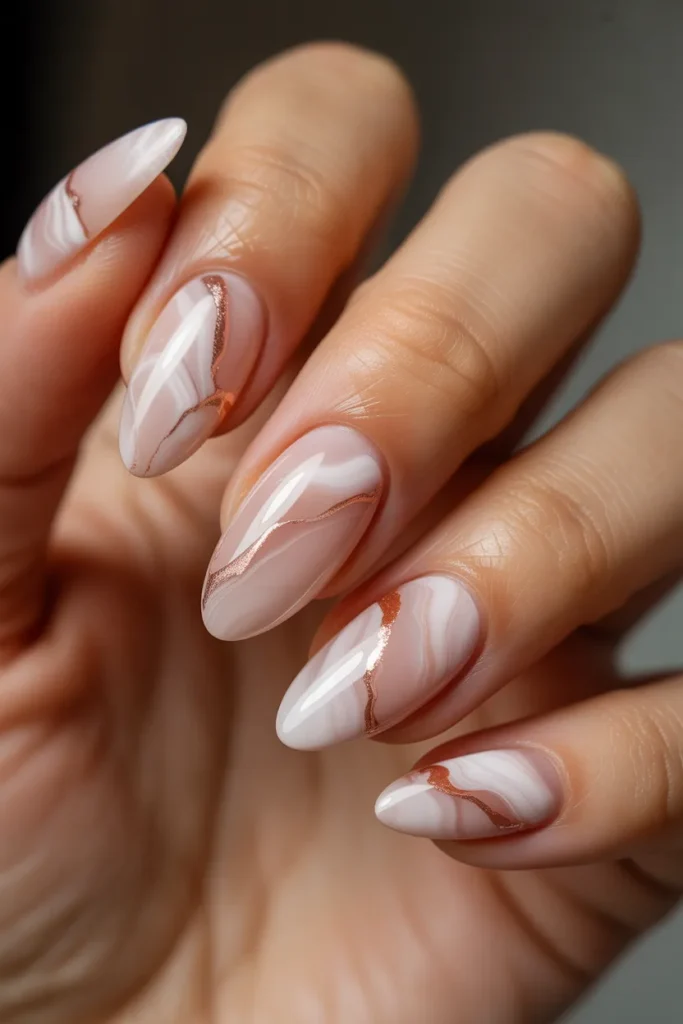
Pink marble nails take the marble technique into the most feminine aesthetic zone. A soft blush base with white primary veins and rose gold secondary veining looks like an actual rose quartz gemstone on each nail.
Apply two coats of blush pink gel, cure. Use white gel paint for the primary marble veins. Add rose gold nail art liner alongside for the secondary veining. The combination reads as luxury jewellery rather than stone.
4 of 20 Grey Marble Nails — Sophisticated Minimalism
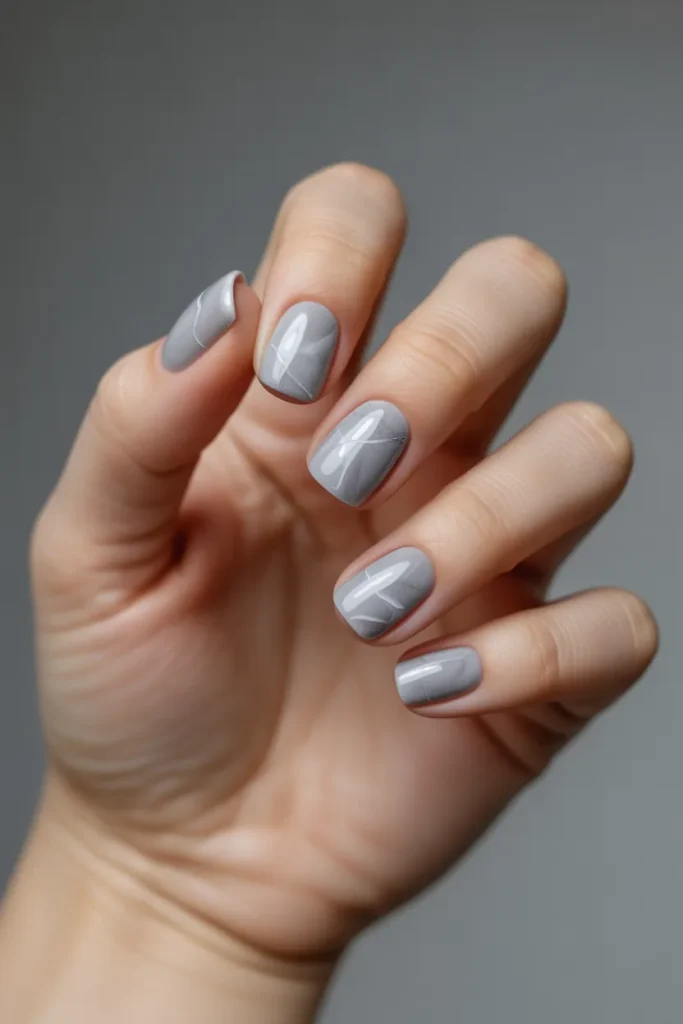
Grey marble nails are the most professional and versatile marble option. The subtle grey-on-grey tone with white veining reads as sophisticated without being dramatic — perfectly suited for workplace settings.
Use light grey gel as the base, and cure fully. Apply thin white gel veins with a fine liner brush — keep them organic and slightly irregular. Matte topcoat over grey marble creates a stone-like surface texture.
5 of 20 Gold — Luxury Stone
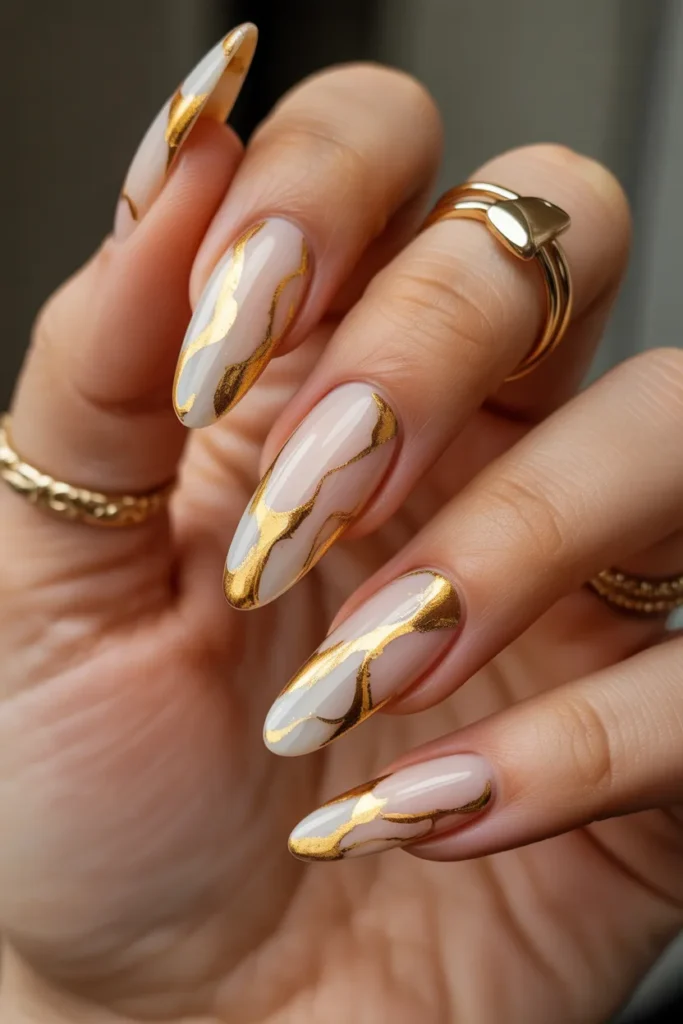
Gold marble nails combine the marble art technique with actual gold foil for a hybrid design that reads as genuinely expensive. The painted gold veins and foil fragments work together for real dimensional depth.
Apply cream or off-white gel base, cure. Paint primary gold veins using gold gel paint liner. Press small gold foil fragments alongside painted veins into a wet topcoat layer before curing. The foil adds physical dimension.
6 of 20 Gold Veins — The Luxury Standard
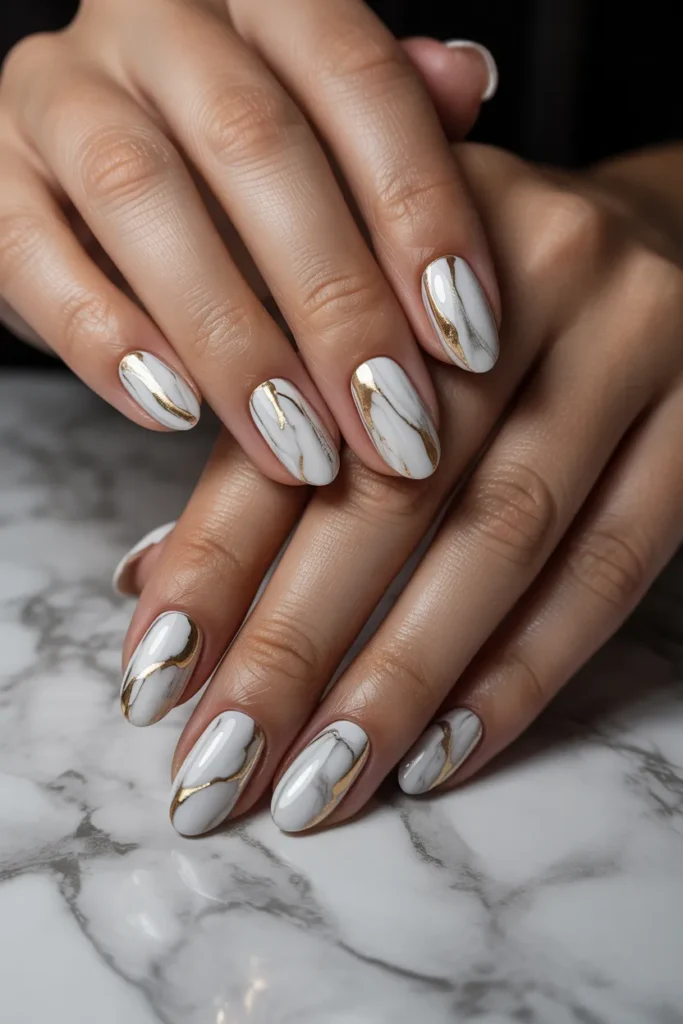
White marble nails with gold veins rather than grey create the most popular luxury marble nail design. Gold veining reads as precious metal rather than natural stone — a slightly fantastical take on real marble.
After curing the white base, use a Modelones Gold Nail Art Liner Gel for the primary veins. The gold liner produces a consistent line width without the variability of brush-loaded paint. Seal with high-gloss topcoat.
7 of 20 Blue Ocean Depths
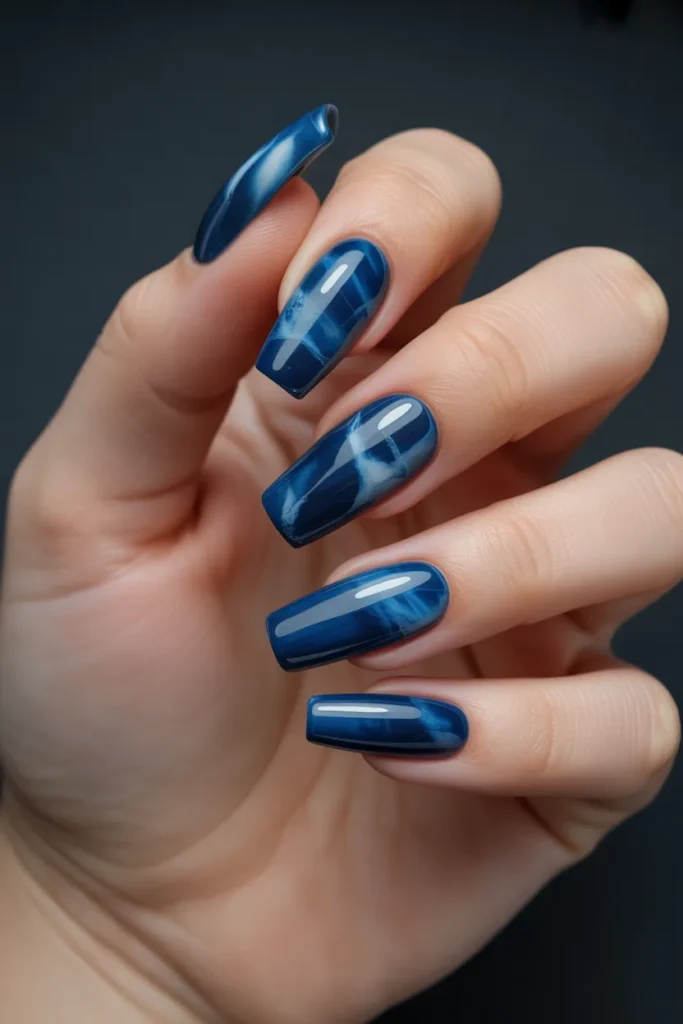
Blue marble nails take the technique into the most unexpected colour territory — deep navy with white and silver veining creates something that reads simultaneously as stone and ocean. Both associations work beautifully.
Apply navy gel base in two coats, cure. Use white gel paint for primary veins applied with a thin liner brush. Add a thin silver metallic liner for secondary veining. The navy-white-silver combination photographs dramatically in studio lighting.
8 of 20 French Tip Hybrid
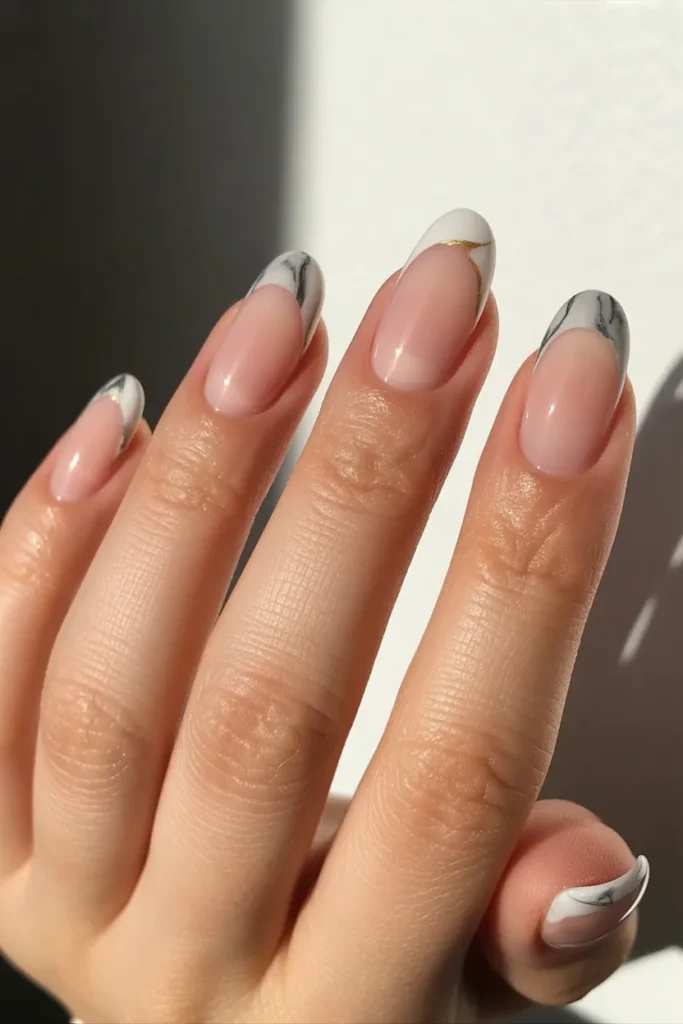
Marble nail art applied only to the French tip area creates a hybrid design — classic French structure with stone pattern detail where the white tip would normally be. Subtle, refined, and genuinely original.
Apply nude gel base and cure. Use French guide stickers to mask the nail body. Apply white gel to the tip, add grey veining while still in the guide boundary, and remove the guide before curing. Seal with glossy topcoat.
9 of 20 Short Square Minimalist
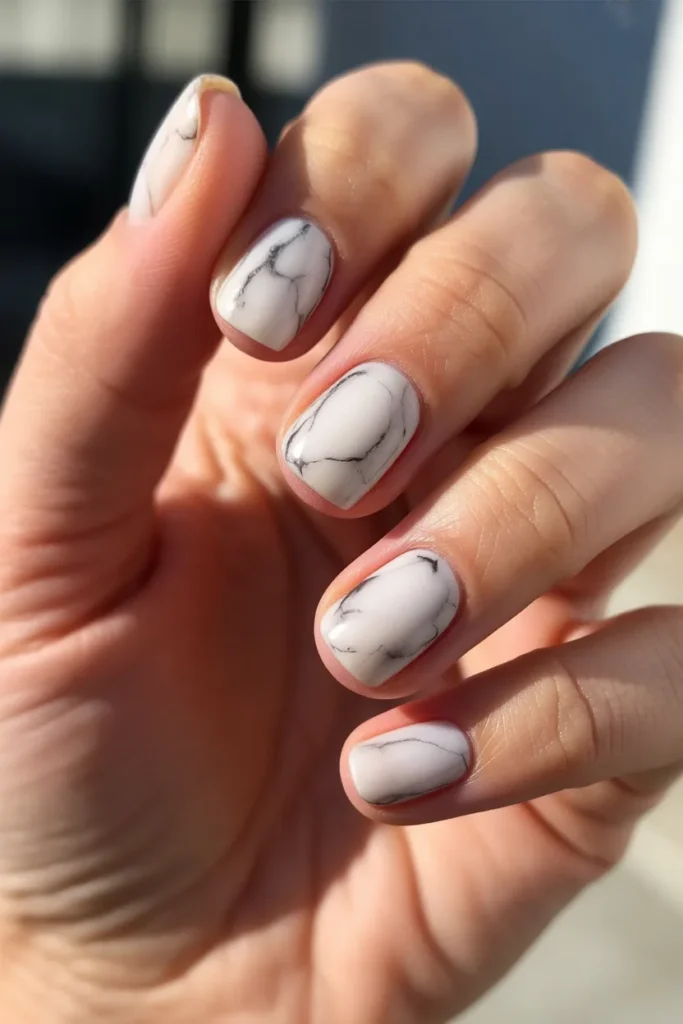
Marble nails short work best with simplified veining — fewer lines, more breathing room around each vein. On very short nails, complex marble patterns crowd the surface and lose their stone-like quality.
Keep two to three primary vein lines maximum on short nails. Apply one or two thinner secondary veins alongside. The restraint actually makes short marble nails look more realistic than attempting full complex patterns.
10 of 20 Acrylic Long Almond Extension
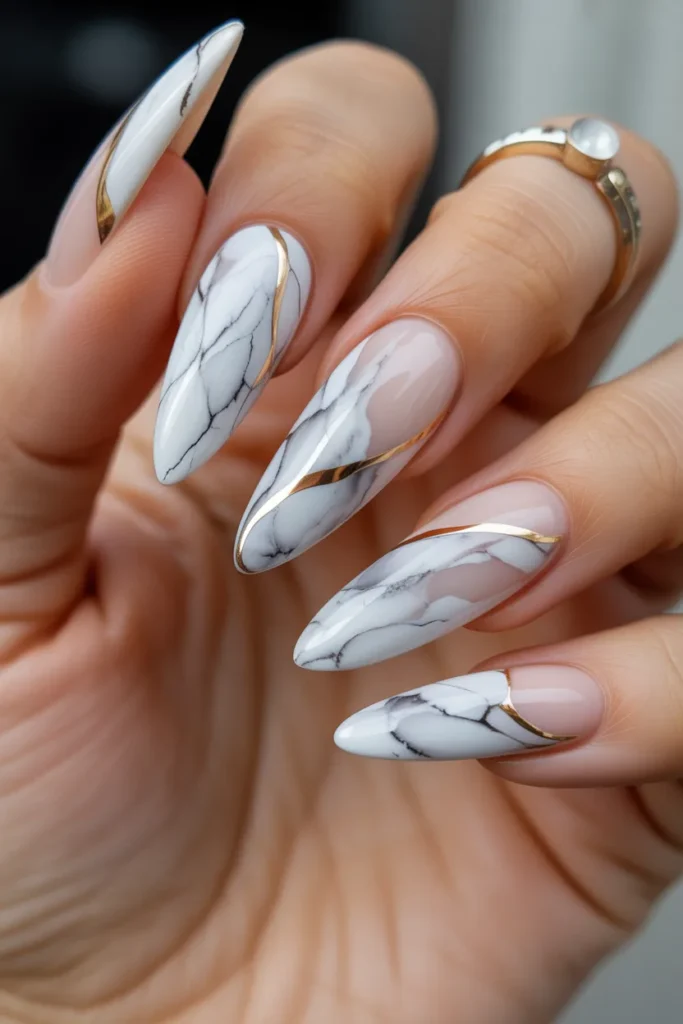
Marble nail designs and acrylic sets benefit from the extended length — more surface means more realistic stone pattern development. Multiple veining layers become possible, creating genuine depth and natural-looking complexity.
Long acrylic marble sets are salon-territory unless you have significant skill. Book specifically for marble nail art and bring reference images showing veining density and pattern direction. The marble pattern should appear across the full nail length.
11 of 20 Green Marble Nails
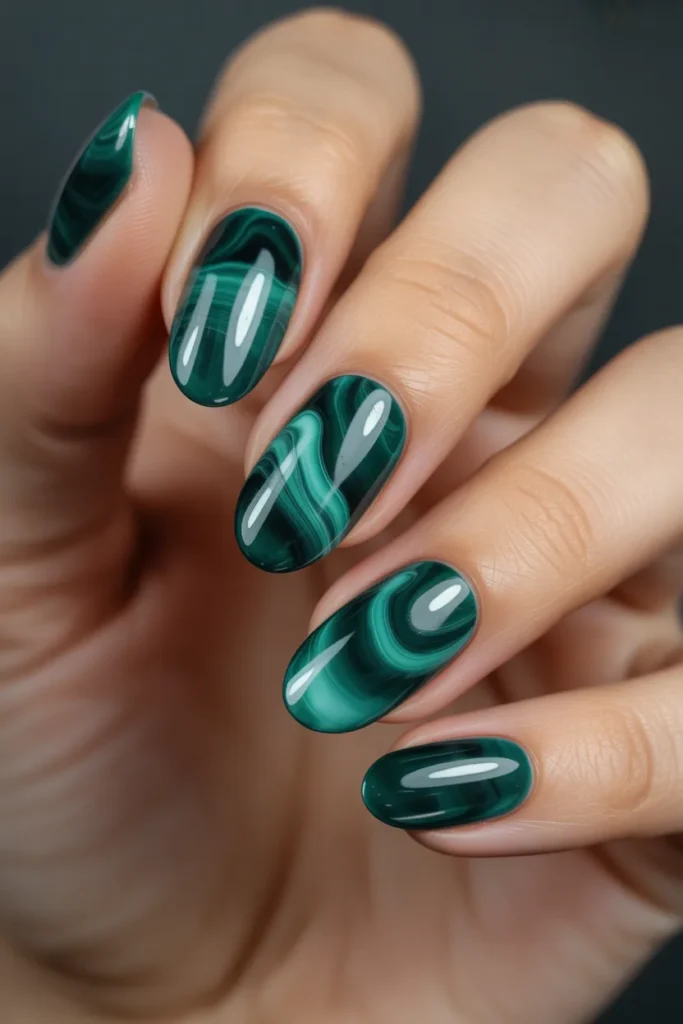
Green marble nails inspired by malachite stone are one of the most distinctive marble nail art variations. The concentric circular patterns of malachite require a different technique than traditional marble veining.
Apply deep emerald gel base. Create circular, concentric vein patterns using sage and light green gel paints with a fine liner brush. The circular movement of malachite differs from the diagonal veins of traditional marble.
12 of 20 Purple Amethyst Stone
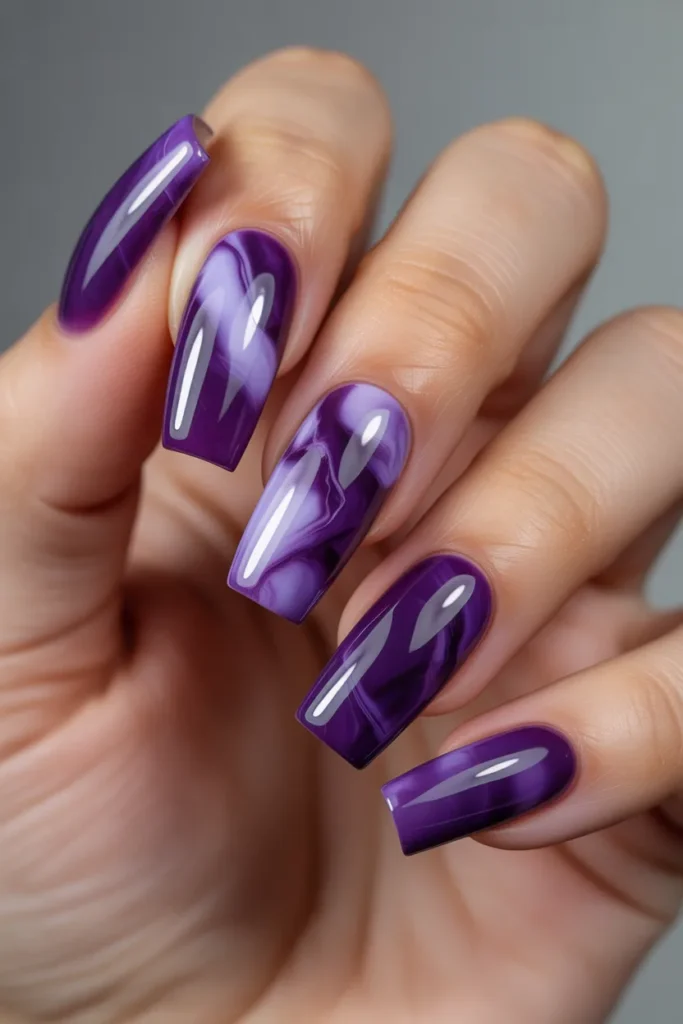
Purple marble nails draw from amethyst aesthetics — a deep purple base with lavender and white veining creates something that looks more like a polished gemstone than a natural stone. Highly distinctive nail art.
Apply two coats of deep violet gel, cure. Use lavender gel paint for the primary veins — lighter purple on darker purple creates a subtle, sophisticated contrast. Add thin white secondary veining for highlight and depth.
13 of 20 White and Rose Gold
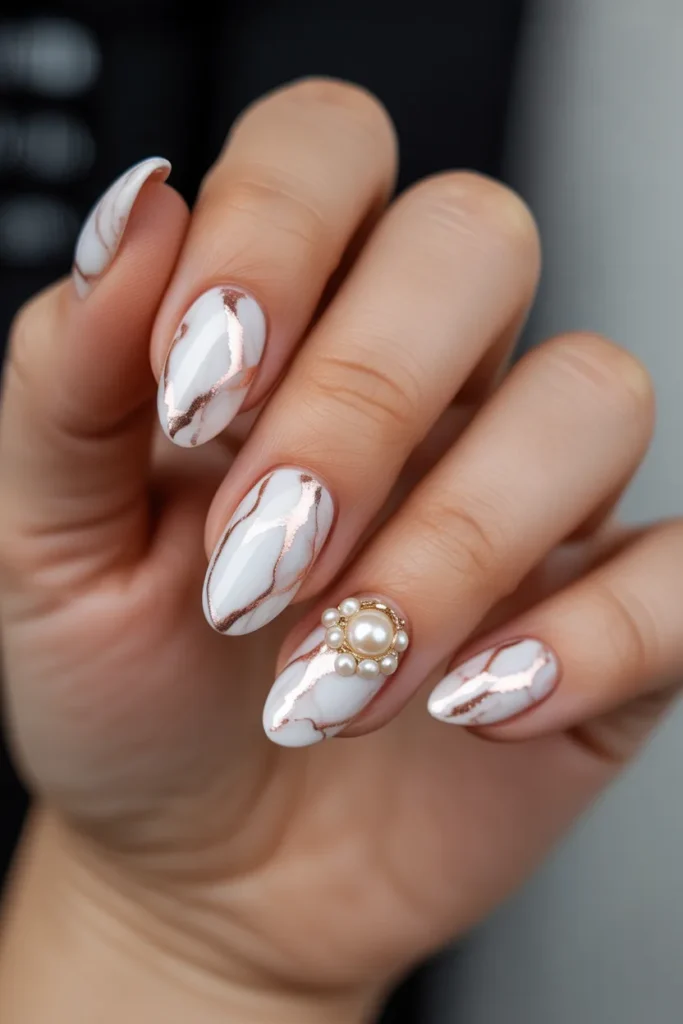
White marble nails with rose gold veining are the most requested bridal marble nail design. The white and warm gold combination reads as simultaneously classic and contemporary — perfect for wedding photography.
Apply white gel base, cure. Use a Born Pretty Rose Gold Nail Art Liner for the primary veins — the liner produces consistent rose gold metallic lines without loading a brush. Add tiny pearl accents near the cuticle on accent nails.
14 of 20 Black and Gold
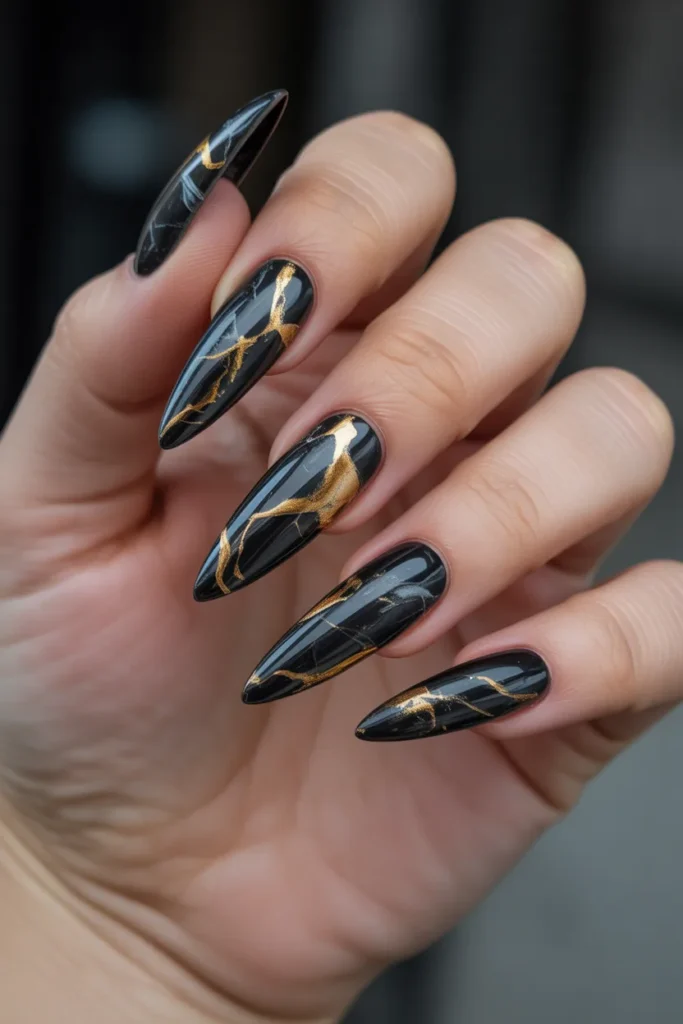
Black marble nails with gold veining are the most editorial combination in this guide — the contrast between deep black and gold metallic reads as fashion-forward luxury rather than natural stone.
The gold veining on black requires a steady hand — the contrast is so high that shaky lines are immediately visible. Use a gold nail art liner pen rather than a brush-loaded paint for the most consistent line quality.
15 of 20 Watercolour Technique
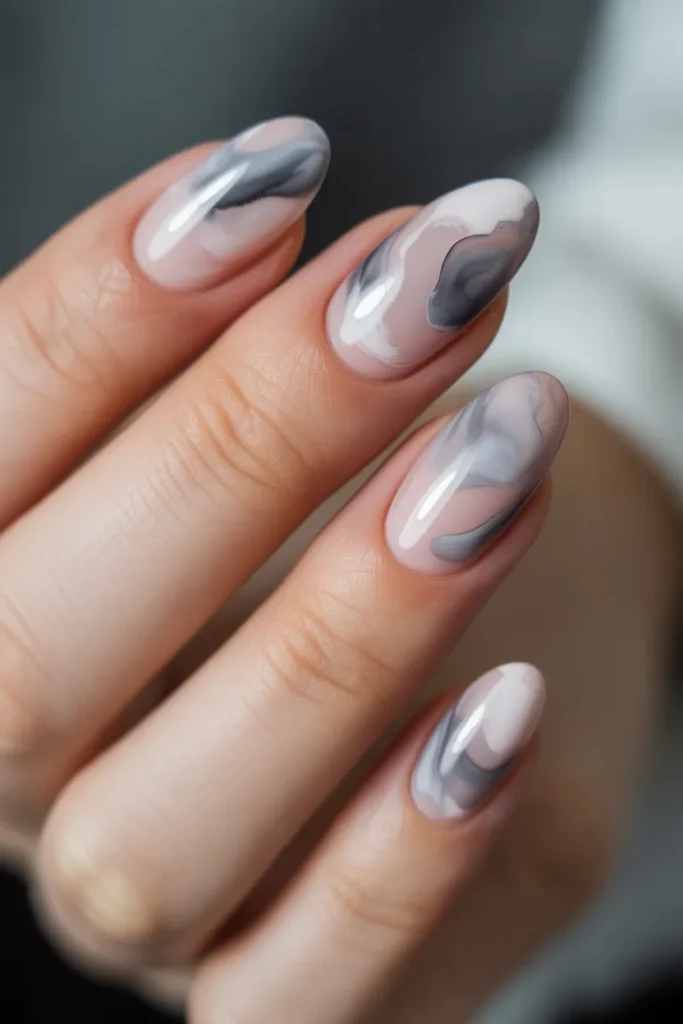
Watercolour marble nail designs use a looser, more blended approach than traditional veining. The result looks like marble painted by an artist rather than photographed from stone — abstract and genuinely beautiful.
Apply sheer white or nude base, cure. Use a flat brush with thinned grey or pink gel paint in loose wash strokes rather than precise veins. The blended, soft edges create the watercolour marble quality. Seal with matte topcoat.
16 of 20 Marble Nails Coffin
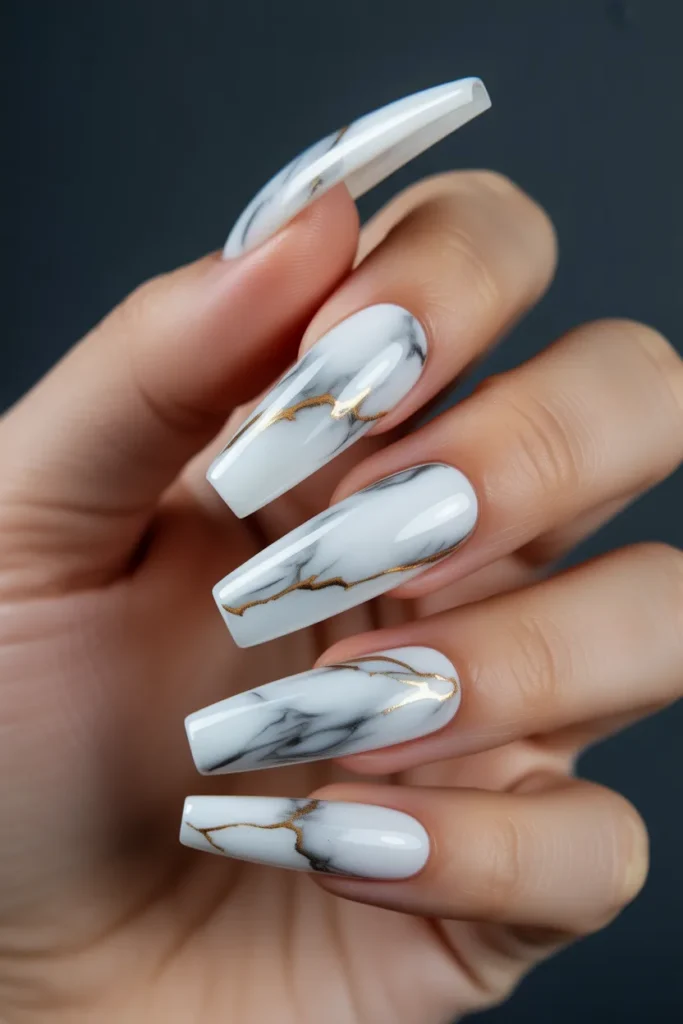
Marble nails coffin shape use the wide flat tip to showcase veining across the maximum surface area. The pattern has room to develop naturally without crowding — the best shape for ambitious marble nail art.
Start vein lines from the cuticle area and allow them to travel naturally toward the tip, following the coffin shape’s width. The wide surface means vein lines can branch realistically before reaching the flat nail edge.
17 of 20 Negative Space Design
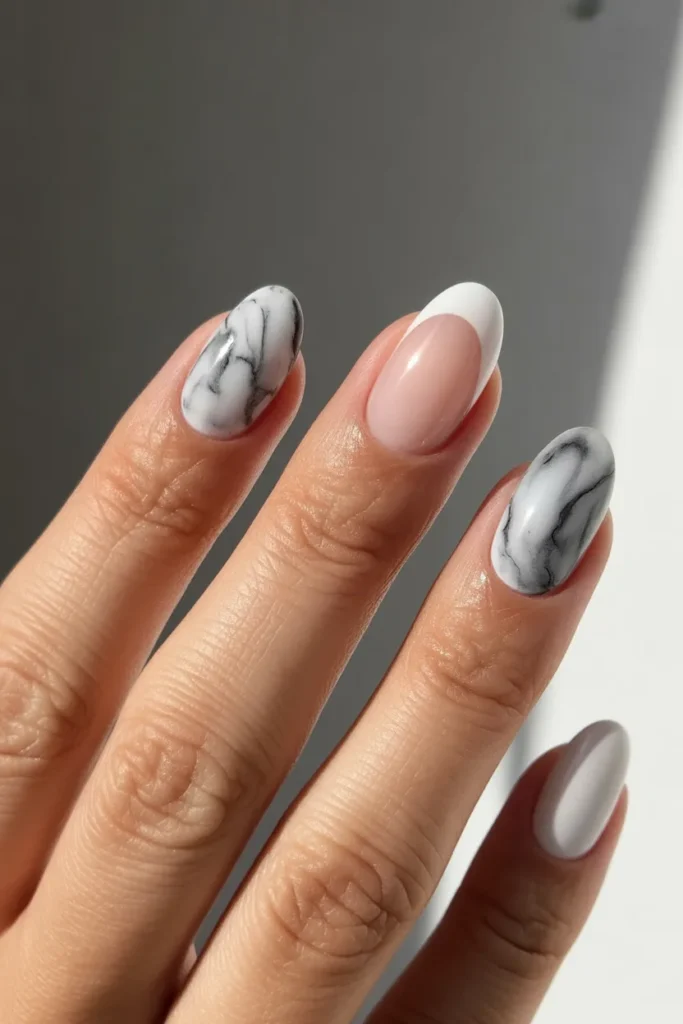
Marble nail art combined with negative space creates a contemporary design where the stone pattern occupies only part of the nail. The contrast between marble art and bare natural nail reads as deliberate and architectural.
Apply tape or nail vinyl to mask half the nail before applying the marble pattern. Remove the masking before curing for a clean edge. The exposed natural nail alongside the marble pattern creates a striking visual contrast.
18 of 20 Grey and White
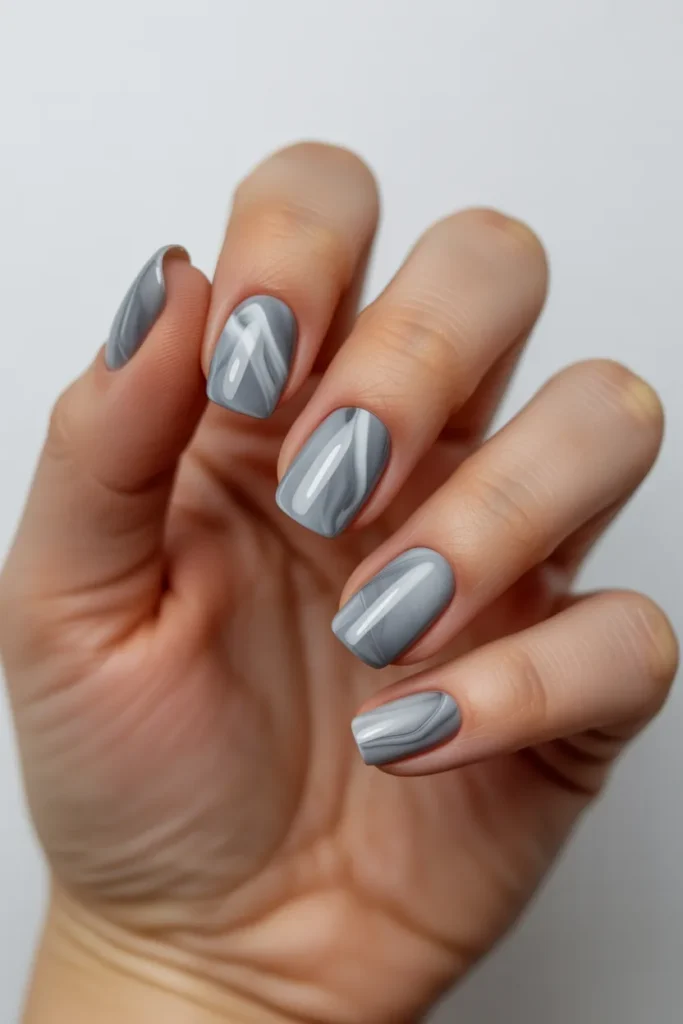
Grey and white marble nails without gold or colour accents represent the purest marble nail aesthetic. The restraint makes the stone pattern the entire design — no embellishment, just beautifully executed technique.
Use mid-grey gel as the base. Apply lighter grey primary veins, then use white gel paint for the thinnest secondary veining highlight lines. Three vein layers create genuine depth without overcrowding the nail surface.
19 of 20 3D Embossed Texture
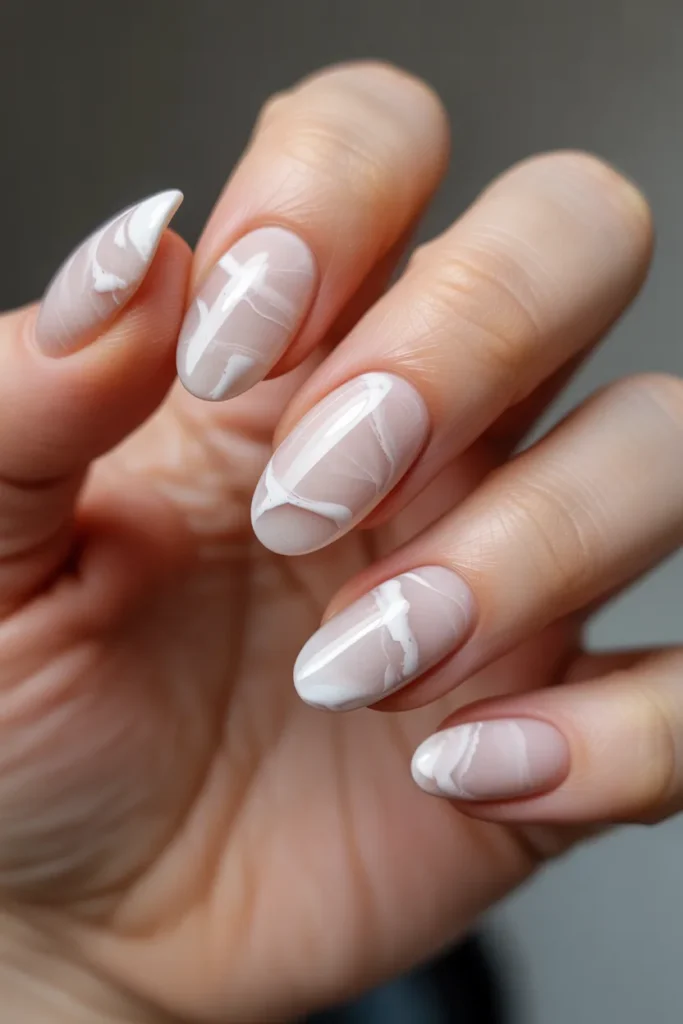
3D embossed marble nails use builder gel to raise the primary veining above the nail surface, creating tactile texture. The veins literally stand above the marble base — the most physically accurate interpretation of real stone.
After curing the white base, pipe thin builder gel veins using a detail brush or nail art pen. Cure each vein before adding adjacent ones. The raised lines catch the topcoat differently than the flat base, intensifying the stone illusion.
20 of 20 Marble Nails 2026 — Chrome Marble Hybrid
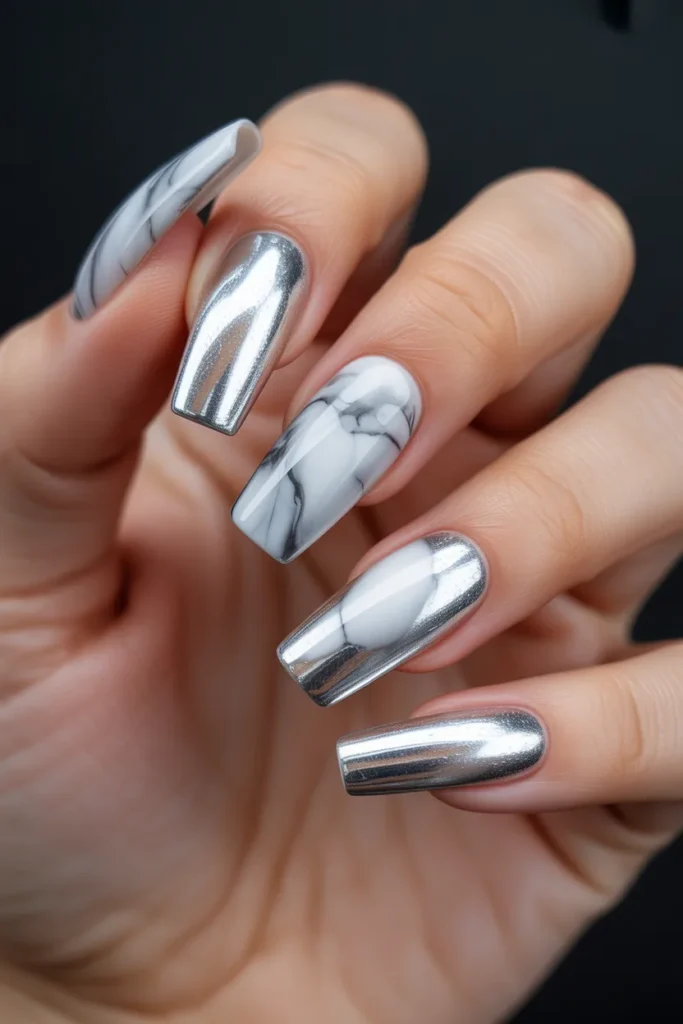
Chrome marble nails are the 2026 evolution of this design — silver chrome powder buffed over a cured white marble pattern creates a metallic stone surface that looks genuinely futuristic and luxurious.
Complete the white marble pattern, apply no-wipe topcoat, cure, then buff silver chrome powder over the entire surface with a silicone applicator. The chrome settles differently over the veining versus the flat base, creating a dimensional metallic stone effect.
How to Do Marble Nails at Home — Step-by-Step
The marble technique is more forgiving than it looks. The key is working with the right tools and not overthinking the vein lines — marble in nature is imperfect, and that authenticity is what you are replicating.
- Apply your chosen base colour — white, black, grey, or colour — in two thin coats. Cure fully between each coat. The base must be completely smooth before any marble veining begins.
- Load a thin liner brush (size 4/0 or 6/0) or a fan brush with your primary vein colour — typically grey or white, depending on base. Do NOT fully load the brush. The brush should be mostly dry for organic-looking strokes.
- Apply the primary vein lines in diagonal strokes across the nail, rotating the nail slightly as you work. Let the brush stutter and tremble slightly — perfect straight lines look artificial on marble art.
- Add secondary thinner vein lines alongside the primary ones using a finer liner brush or nail art pen in your accent colour — gold, silver, or a tonal variation. These should be approximately half the width of the primary veins.
- Cure the vein layer for 60 seconds fully before the topcoat. Uncured gel veining smears when the topcoat is applied over it.
Apply high-gloss no-wipe topcoat in a single smooth pass. Cure for 60 seconds. The topcoat both protects the pattern and intensifies the depth of the stone effect significantly.
Frequently Asked Questions
Q: How do you do marble nails for beginners?
Start with white marble nails on a white gel base. Use a fine liner brush loaded very lightly with grey gel paint to draw two or three diagonal vein lines across the cured base. Add thinner lines alongside. Cure and seal with glossy topcoat. The forgiving quality of the design means imperfect lines add to the marble effect rather than ruining it.
Q: What is the easiest marble nail technique?
The liner brush technique over gel is the most controllable for beginners. The watercolour wash technique — using a flat brush with thinned gel paint in loose strokes — is even easier because the blended edges hide any imprecision. Both produce genuinely beautiful results. Avoid the water marble technique (polish floated on water) until you are comfortable with the gel method.
Q: How long do marble nail designs last?
Gel marble nail designs sealed with no-wipe glossy topcoat last 2 to 3 weeks before chipping or lifting. The vein art is protected under a topcoat and does not fade or rub off. Reapplying a thin topcoat layer every 5 to 7 days extends the manicure without redoing the full design. Regularly polished marble nails last 5 to 7 days maximum.
Q: What nail shapes work best for marble nail art?
Oval and almond shapes suit marble nail art because the curved tip creates a natural frame for the diagonal vein pattern. Coffin shapes at medium to long lengths provide the widest surface for complex veining. Short square nails work with simplified two to three-vein designs. Stiletto shapes can work, but the very narrow tip area requires extremely precise veining to look intentional.
Q: Can you do marble nails without gel?
Yes, regular nail polish marble nails use the wet-on-wet technique. Apply the base colour, wait 90 seconds for it to become tacky but not dry, then quickly apply vein lines with a thin detail brush or toothpick in a contrasting polish. The slightly wet base allows the two polishes to blend naturally at the edges, creating an organic marble look. Work on one nail at a time and seal immediately with clear topcoat.
Finding Your Version of Marble Nails
The 20 designs above show marble nail art at every level — from three-vein minimalist designs on short square nails to chrome marble hybrids representing 2026’s most forward direction.
Start simple. White marble on oval nails with grey and gold veining. Get that right — the technique, the brush loading, the vein angle — and every more complex version in this list becomes genuinely accessible.

Victoria Lane
Victoria Lane is a nail enthusiast, digital creator, and the founder of Modern Nail Design. With over five years of researching nail trends, testing techniques, and building one of the web's most active nail inspiration blogs, she writes every article personally. Her goal is simple — give every woman the ideas and knowledge to get nails she genuinely loves.